Why is adjustment necessary?
The application of time-of-use (TOU) electricity pricing is a common solution in many countries to encourage customers to shift their load and use electricity more efficiently. According to expert Ha Dang Son, Chairman of the Center for Energy and Green Growth Research, in Vietnam, the electricity pricing mechanism based on peak, normal, and off-peak hours has long been applied to businesses and customers using electricity under TOU tariffs.
Previously, electricity pricing based on peak, normal, and off-peak hours was applied according to the regulations in Circular No. 16/2014/TT-BCT dated May 29, 2014, of the Ministry of Industry and Trade; in which the two peak hours were from 9:30 to 11:30 and from 17:00 to 20:00 on weekdays from Monday to Saturday. This mechanism was developed based on the load characteristics and power generation mix of more than a decade ago.
However, according to the National Power System and Market Operator (NSMO), Vietnam's power system has undergone significant changes in both its generation mix and load characteristics since 2018.
On the demand side, the industrial sector's share of total commercial electricity sales increased from approximately 30% in 2018 to more than 50% by the end of 2025, while the residential sector's share declined from around 50% to approximately 33%. As a result, the system load profile no longer follows its previous pattern.
Regarding the generation mix, the installed renewable energy capacity increased from approximately 583 MW in 2018 to nearly 23,833 MW by the end of 2025 - an increase of more than 40 times. In particular, solar power has become an important daytime power source, significantly changing the way power sources are operated and mobilized within the system.
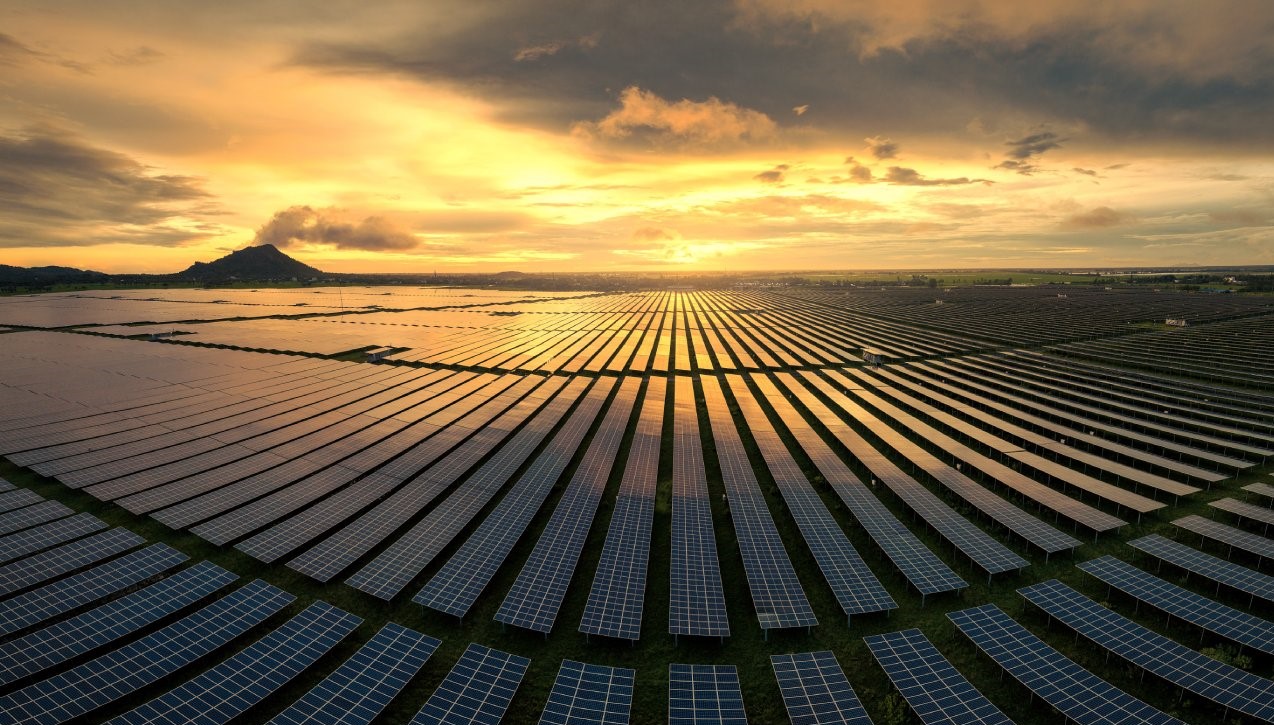
Solar power has developed strongly in recent years. (Illustrative image)
Expert Ha Dang Son noted that in recent years, the story of electricity supply has seen different scenarios and approaches. Previously, when solar power was not yet developed, the load typically peaked at noon and in the evening. However, with the strong increase in solar power, the peak load has changed.
Currently, the greatest pressure on the power system is concentrated in the evening – the time when electricity demand is high, while solar power is no longer generating electricity. These changes require corresponding adjustments to power system operation and electricity consumption mechanisms. Therefore, revising the peak and off-peak time periods has become essential to meet the evolving operational requirements of the power system.
Benefits for both system and electricity users
According to Decision 963/QD-BCT dated April 22, 2026, of the Ministry of Industry and Trade, peak hours are adjusted to focus on the evening, from 5:30 PM to 10:30 PM (5 hours/day) from Monday to Saturday; peak hours do not apply on Sunday. Meanwhile, off-peak hours remain from 12:00 AM to 6:00 AM every day of the week (6 hours/day); the rest are normal hours.
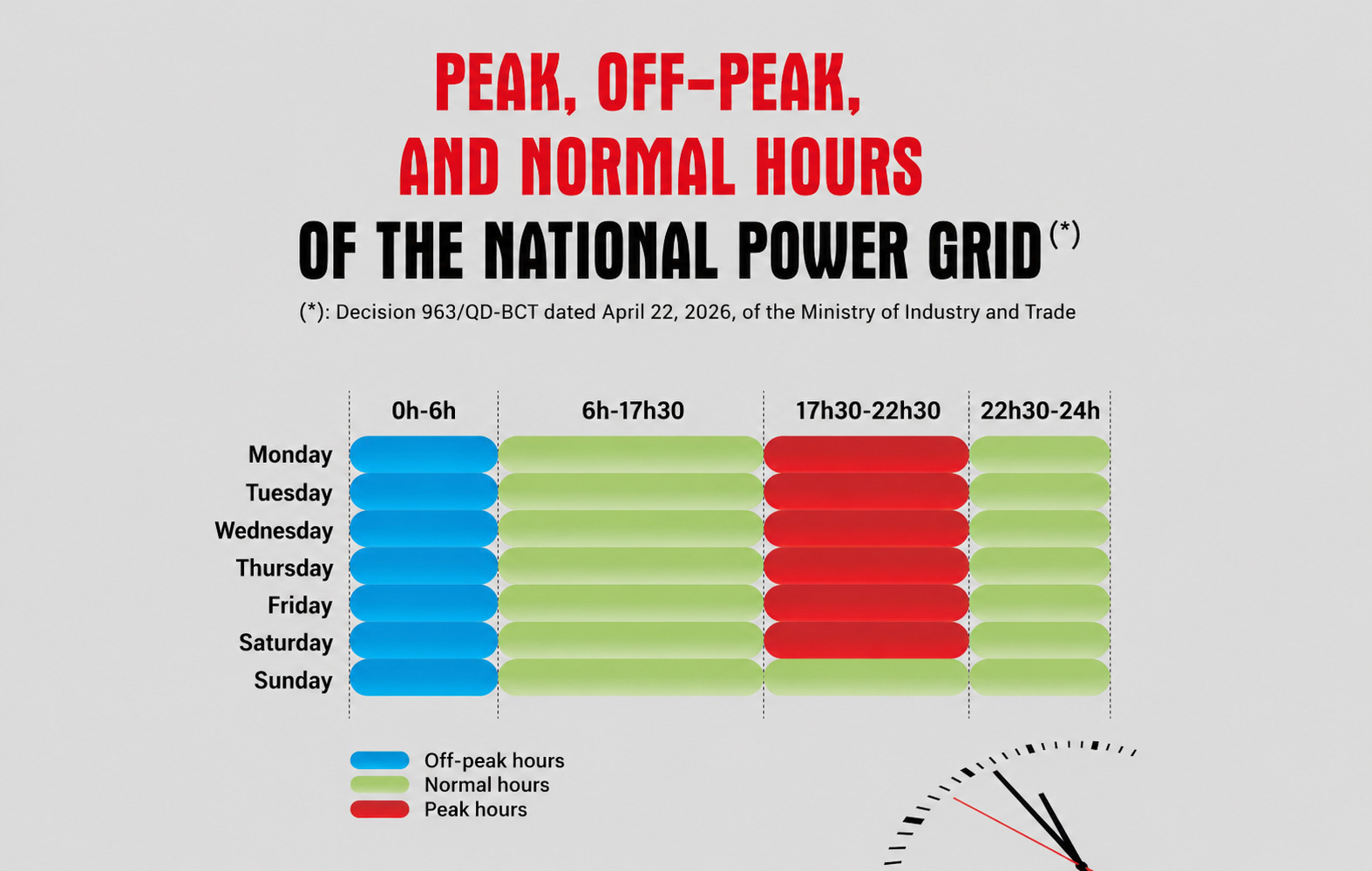
Notably, the adjustment of peak, normal, and off-peak hours according to Decision No. 963/QD-BCT dated April 22, 2026, does not change the current electricity selling price, nor does it increase the total number of peak hours per day. Electricity prices will continue to be applied in accordance with the tariff schedule prescribed by the competent authorities. The only change is the adjustment of the time periods under the time-of-use (TOU) electricity tariff to better align with the current operating conditions of the power system and electricity consumption patterns.
The revision will have no impact on households purchasing electricity under the residential retail electricity tariff.
The groups directly affected are businesses, production facilities, and customers applying the TOU electricity tariff.
Removing the morning peak hours allows businesses to organize continuous production during business hours, improving production efficiency and facilitating shift scheduling. Employees will no longer need to interrupt their work shifts solely to avoid peak-hour electricity tariffs, thereby improving working conditions, ensuring more stable work schedules, and enhancing employee morale.
For the power system, adjusting peak and off-peak hours brings many practical benefits. According to expert Dao Nhat Dinh, eliminating the morning peak hours will encourage customers to increase electricity use during the day, especially when solar power generation is at its highest. This will help the system better absorb electricity from renewable energy sources, avoiding waste.
In addition, extending the duration of peak-rate pricing during the evening peak period will encourage customers to shift or reduce their electricity use. When peak load is lowered, the system will reduce the need to mobilize high-cost power sources, especially oil-fired and gas-fired thermal power plants.
In the long term, adjusting the time periods will not only enable businesses to better organize production and use electricity more efficiently but also improve the operational efficiency of the national power system. When electricity demand is distributed more evenly, the power system can make better use of renewable energy, reduce the need to dispatch high-cost generating units during peak periods, thereby promoting energy conservation and efficiency and helping maintain stable electricity prices over the long term.
|
The three entities required to apply time-of-day electricity pricing include:
- Electricity buyers using electricity for production and business purposes are supplied with electricity through dedicated transformers of 25 kVA or more, or have an average electricity consumption of 2,000 kWh/month or more for three consecutive months;
- Electricity retailers in industrial parks and clusters;
- Electricity purchasing entity for retail sale outside of residential purposes within a commercial-service-residential complex.
(According to Clause 3, Article 5 of Circular No. 60/2025/TT-BCT dated December 2, 2025 of the Ministry of Industry and Trade)
|
Translator: Hải Yến
Share