Energy price cuts to help curb inflation, boost growth: experts
15:46, 05/11/2026
The Government's decision to cut the average retail electricity price by 2% and reduce the petrol excise taxes to zero percent from November 1 is expected to ease cost pressures on consumer prices and support economic activity, particularly for businesses facing high input costs.
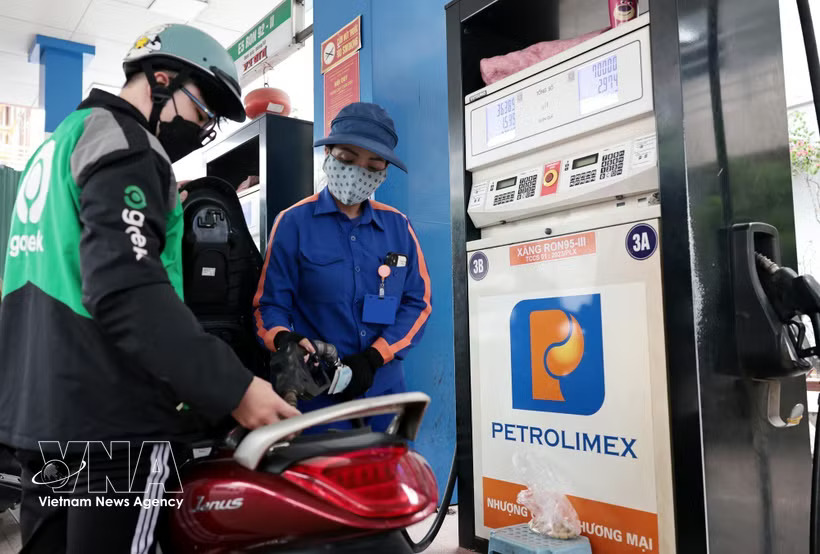
Cutting the excise tax on petrol is expected to help reduce costs for households and businesses. (Illustrative photo: VNA)
Cuts in the excise tax on petrol and the average retail electricity price, both effective from November 1, 2026, will help reduce costs for households and businesses, support production and business activities, curb inflation and sustain economic growth in the remaining months of the year, said insiders.
Easing costs and supporting production
According to the National Statistics Office (NSO) under the Ministry of Finance, the consumer price index (CPI) increased 4.52% in the first nine months of 2026, exceeding this year's ceiling inflation target of 4.5%. Inflationary and moderating factors are expected to continue to intertwine in the remaining months, posing challenges to economic governance.
Against this backdrop, the Government's decision to cut the average retail electricity price by 2% and reduce the petrol excise taxes to zero percent from November 1 is expected to ease cost pressures on consumer prices and support economic activity, particularly for businesses facing high input costs.
Nguyen Tien Thoa, Chairman of the Vietnam Valuation Association, said the electricity price reduction, implemented by the Ministry of Industry and Trade (MOIT) and Vietnam Electricity (EVN), will have considerable spillover effects, helping stabilise the macro-economy, control inflation, support production and reduce household expenses.
The cut is expected to lower the CPI directly and indirectly while reducing production costs in energy-intensive industries. Estimates show that costs could fall by around 0.12% in steel, 0.3% in cement and 0.2% in textiles, giving businesses more room to reduce product prices.
Meanwhile, bringing the excise tax rate on petrol to zero percent is set to reduce domestic petrol prices by approximately 1,500–1,700 VND per litre, helping lower production costs and contain inflation.
Assoc. Prof. and Dr Ngo Tri Long, an economic expert, warned that failure to control energy prices in the final two months of the year could add considerable pressure to inflation. He identified petrol and electricity prices as key factors that could be addressed through policy measures.
As essential inputs for production and daily life, lower energy prices would help ease living costs, strengthen purchasing power and support macroeconomic stability and growth, he said.
More support for economic growth to accelerate
Long said lower energy prices will benefit both businesses and consumers by reducing production costs and easing price pressures on goods and services. The 2% electricity price cut will also help ease household expenditure pressures.
For businesses, cheaper petrol and electricity will reduce input costs, improve competitiveness and facilitate production, particularly amid deeper economic integration and growing competition.
Assoc. Prof. and Dr Nguyen Thuong Lang of the National Economics University said the immediate impact will be lower overall economic costs as electricity and petrol are essential inputs for many industries. This will help businesses improve operational efficiency.
Lower energy expenses could also reduce product prices, strengthen competitiveness and improve cash flow, he noted, adding that businesses with strong orders and expansion plans could use the savings to invest in machinery and equipment or recruit more workers.
For consumers, lower electricity, petrol and transport costs will increase real disposable income, enabling households to spend more on other goods and services and supporting market demand.
Lang stressed that energy price reductions should be part of a broader package of economic measures. Combined with faster public investment disbursement, efforts to encourage private investment and sustained trade growth, they could help generate fresh momentum for the economy./.
VNA
Share