From skepticism to... reality
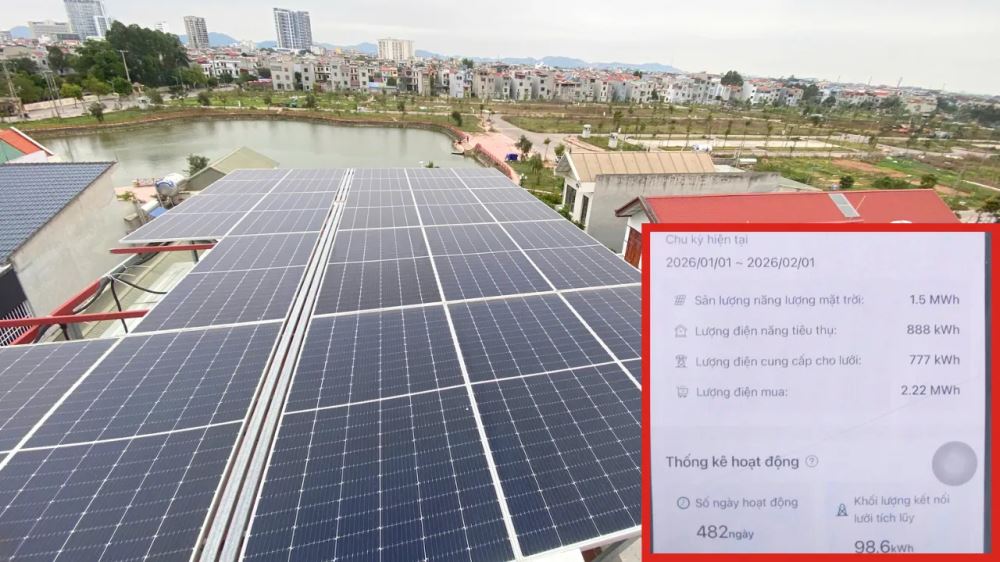
Solar power system of Ms. Thuy's family in Bac Giang ward, Bac Ninh province.
According to statistics from the Northern Power Corporation (EVNNPC) - the enterprise managing 17 provincial power companies in the North (excluding Hanoi) - as of December 31, 2025, EVNNPC had received notifications from 1,673 customers registering to develop self-sufficient RSP systems with a total capacity of 438.5MW. Of these, 1,599 customers have completed installation, acceptance testing, and commissioning with a total capacity of 323.6MW; 74 customers are currently implementing projects, with an expected additional 114.9MW in the near future. In addition, 454MWp of RSP capacity has been installed by organizations and individuals, along with battery energy storage systems (BESS) totaling approximately 8,600kWh. These figures demonstrate the significant interest of society and the public in this clean energy source.
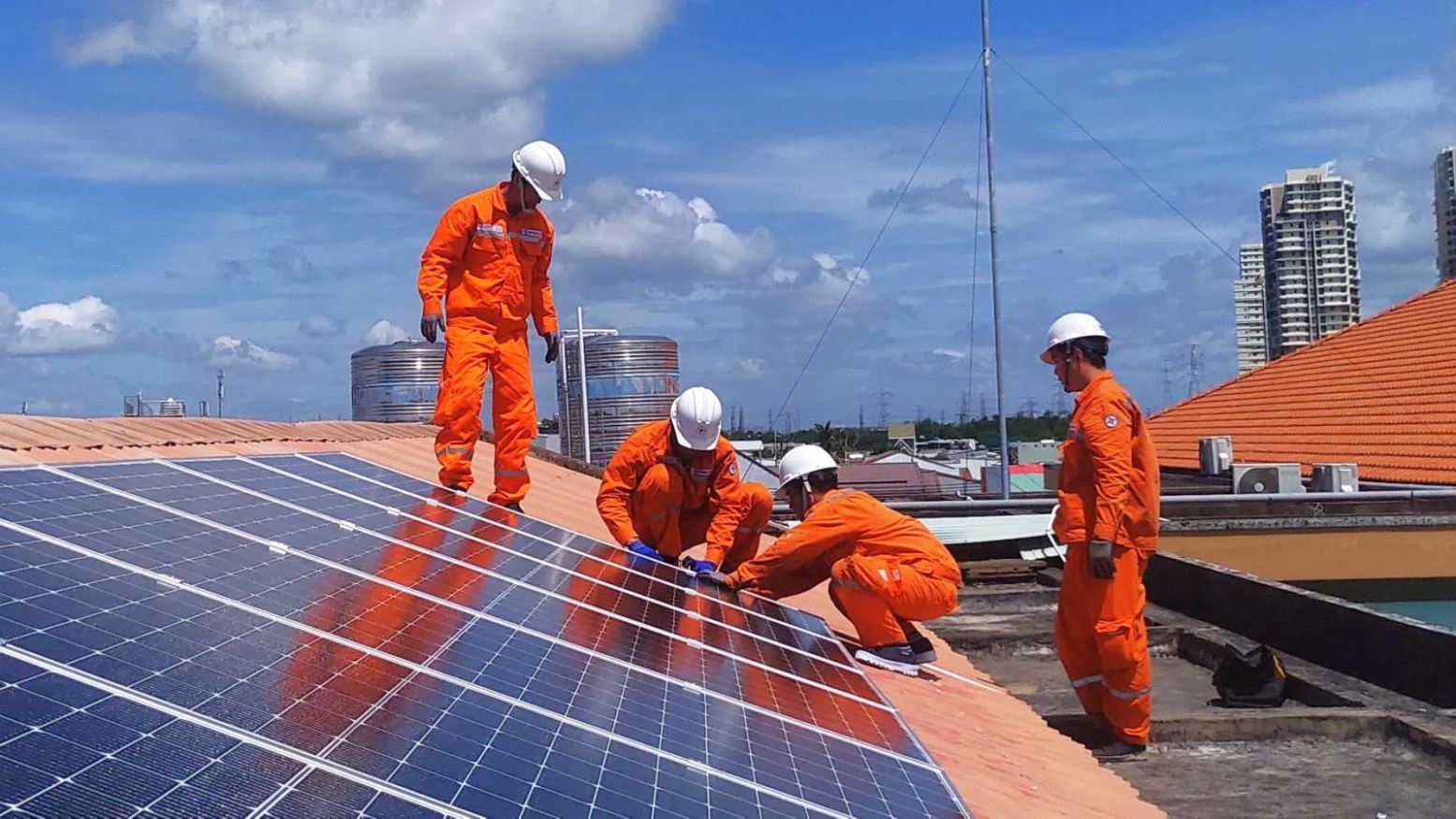
RSP is distributed energy source that can help reduce pressure on power supply system, especially during peak load hours.
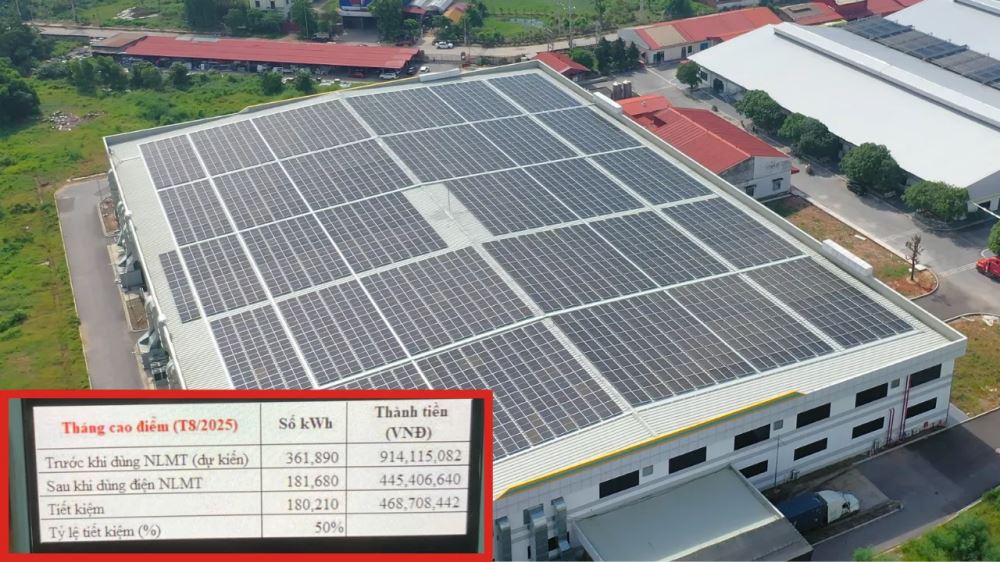
Solar power system at LNG garment factory.
Costs have dropped significantly.
According to expert Ha Dang Son, former Director of the Green Energy Center, the cost of installing solar power has now decreased sharply, by 40-50% compared to about 5 years ago. This means that a project that previously needed 8 years to recoup its investment now takes less than 5 years - for the northern region.
According to Mr. Nguyen Van Tin, Head of Business Department of EVNNPC, a survey conducted by the unit at the end of 2025 showed that a 10kWp RSP system for a household with a roof area of over 100m², currently costs approximately VND 70-90 million, not including the battery storage system. Adding a battery storage system could increase the cost by another VND 15-20 million, depending on capacity. "Compared to the period before 2022, the investment cost has decreased by about 30-40%, making it more accessible to people," Mr. Tin added.
According to Mr. Nguyen Van Tin, assuming a household in an urban area has an average power consumption of about 650-750kWh/month, installing a 7kWp system without battery storage would cost approximately VND 60 million initially. This system could help reduce electricity purchased from the grid by about 40-50% during the day. The estimated payback period is 4-5 years, depending on electricity usage habits. With battery storage, the system can utilize solar power both during the day and at night, reducing dependence on the grid during peak hours and increasing backup capacity in case of local power outages.
Lower costs and improved efficiency are helping RSP in Northern Vietnam overcome its previous perception of being unattractive. However, to achieve the tens of thousands of megawatts of installed capacity as envisioned in the revised Power Development Plan VIII, the challenge lies not only in the economic efficiency of each individual project, but also in the need for mechanisms, policies, and incentives to attract investment from organizations and individuals.
Translator: Nguyễn Thị Lan Anh
Share