Metering infrastructure ready for direct power purchase agreement (DPPA) mechanism
The growing trend toward renewable energy use is placing new demands on industrial production. In addition to electricity prices and supply stability, many FDI enterprises are interested in access to green electricity and renewable energy certificates. In Dong Nai City, which is home to numerous industrial parks, the energy transition involves not only adding power generation sources but also preparing an appropriate power supply system.
Speaking to reporters from Industry and Trade Newspaper, Mr. Tran The Du, Deputy Director of Dong Nai Power Company, said the company considers technical infrastructure preparation a key condition for businesses to participate in the Direct Power Purchase Agreement (DPPA) mechanism in a convenient, transparent, and safe manner. Immediate priorities include metering systems, data collection, and the capacity to meet the operational requirements of large electricity consumers. Technical preparations at the outset help bridge the gap between policy mechanisms and their practical implementation at enterprises.
Specifically, large electricity consumers have been equipped with multi-tariff electronic meters connected to centralized remote metering data collection systems. Data from most customers in industrial parks are automatically collected at 30-minute intervals. This is an important preparatory step, as electricity transactions under the new mechanism require not only monthly total consumption figures but also interval data for reconciliation and payment in accordance with contracts.
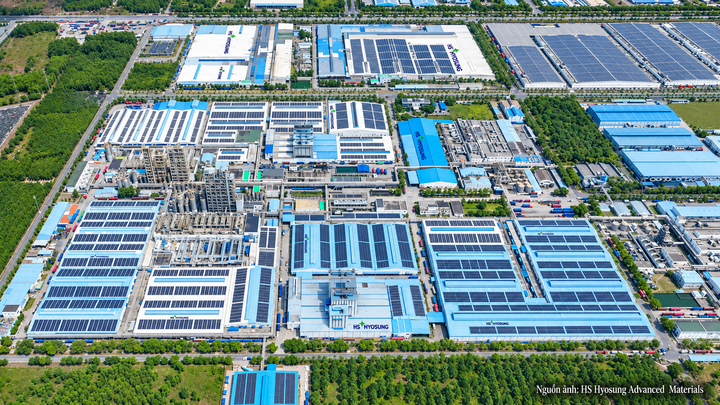
Rooftop solar power systems in industrial parks contribute to promoting green energy use in production in Dong Nai.
The 30-minute data helps identify when electricity is consumed and provides a basis for comparing electricity output between parties. For businesses with shift-based fluctuating loads, this method of recording data supports the assessment of electricity purchasing and consumption plans. Its value lies not only in the metering equipment itself but also in the quality of data used for transactions.
Regarding policies, Decree No. 57/2025/ND-CP stipulates the mechanism for direct electricity trading between renewable energy generators and large electricity consumers. On June 26, 2026, the Government issued Decree No. 243/2026/ND-CP, amending and supplementing several related provisions while revising policies on renewable energy development. This legal framework provides an additional basis for parties to formulate transaction plans suited to actual conditions.
However, the readiness of metering infrastructure does not mean that DPPA transactions have been widely implemented. For the mechanism to operate effectively, data recording must be accompanied by reconciliation capabilities, contract implementation, and compliance with electricity market regulations. The preparations made by the power distribution company therefore serve as a foundation, providing businesses with the necessary technical conditions when choosing options to access renewable energy sources.
Rooftop solar power poses new requirements for distribution grid
In addition to DPPA, self-produced and self-consumed rooftop solar power is attracting interest from many industrial customers. On-site power generation makes use of factory rooftop space, but when connected to the grid, the issue is not merely equipment installation but also the grid's capacity to accommodate the power output and ensure safe operation.
Mr. Tran The Du said that as of September 30, 2026, 55 customers in industrial parks across the city had submitted notifications and registered for the development of self-produced and self-consumed rooftop solar power systems, with a total capacity of approximately 77.02MWp. This figure reflects demand for on-site power generation but does not mean that all registered capacity has been commissioned or is feeding electricity into the grid.
The registered capacity necessitates an assessment of each grid connection point. Areas with solar power generation need to be monitored as generation output and load demand fluctuate. The grid's capacity to accommodate electricity depends on transmission lines, substations, and specific operating conditions; therefore, a uniform assessment cannot be applied to all locations.
To proactively provide information to customers, Dong Nai Power Company reports monthly to the Department of Industry and Trade and publishes on its website a list of fully loaded medium-voltage lines and substations that can no longer accommodate additional capacity. This information helps investors consider grid connection options before implementing their systems.
Meanwhile, these power sources are gradually being monitored through the distribution dispatching control system. Inspections of customers' compliance with technical grid connection requirements and electrical safety regulations are also conducted regularly. These activities aim to ensure that the development of on-site power sources remains aligned with the overall requirements of grid operation, particularly in areas with concentrated electricity demand.
Alongside the integration of new power sources, 110kV and medium-voltage grid infrastructure in areas with concentrated industrial parks is being invested in and upgraded to ensure power supply capacity. Favorable factory rooftop conditions do not necessarily mean that every grid connection option is feasible if the grid fails to meet technical requirements.
On July 31, 2026, the Department of Industry and Trade and the Dong Nai Industrial Parks and Economic Zones Management Board held a workshop on energy efficiency and rooftop solar power development, helping disseminate regulations and discuss implementation difficulties with businesses.
In the coming time, coordination among the power sector, the Department of Industry and Trade and the Industrial Parks Management Board will continue to support businesses in their energy transition. Metering infrastructure, publicly available information on grid capacity to accommodate additional generation, and grid connection safety are practical conditions for Dong Nai to develop green energy appropriately and sustainably.
Under current regulations, the Direct Power Purchase Agreement (DPPA) mechanism is implemented through two forms: private connection grids and the national grid. Under the private connection grid model, electricity is transmitted directly from renewable energy generators to buyers through a dedicated connection system. Under the national grid model, parties conduct transactions through the electricity market mechanism and relevant contracts. The choice of model depends on the parties' conditions and applicable laws and regulations.
Translator: Vân Ly
Share