According to Dr. Ngo Phi Thuong, a lecturer at the Faculty of Electrical and Electronics Engineering, Cao Thang Technical College in Ho Chi Minh City, rooftop solar power systems may be affected by strong winds, rainwater ingress, impacts from trees or other objects, lightning, and propagated transient overvoltages during storms.
Experts recommend that households with rooftop solar power systems carry out inspections only in accordance with the principles of “do not come into contact with live parts” and “do not approach or touch photovoltaic panels if they are displaced or structurally damaged.”
Homeowners can check for error codes on the converter or monitoring app, review operational history, and observe or photograph the system's condition from a safe location to share with the installation or technical service provider.
After a storm, people should not climb onto the roof themselves to inspect the system, especially when the roof is still wet and slippery or shows signs of structural damage. If the electrical system is damaged or its insulation compromised, the damp environment further increases the risk of electric shock.
Experts also advise against attempting to disconnect connectors, open inverters or electrical cabinets, or handle damaged wiring without professional assistance. If a circuit breaker trips immediately after being reset, or if the inverter repeatedly reports errors upon startup, users should not attempt to restart the system multiple times.
If photovoltaic panels or mounting structures are damaged or displaced, wiring is damaged, water has entered electrical equipment, there is a burning smell or excessive heat, protective devices have tripped, or the battery storage system shows signs of abnormality, operation should be stopped in accordance with the procedures and instructions provided by the manufacturer or installer, as applicable to each system.
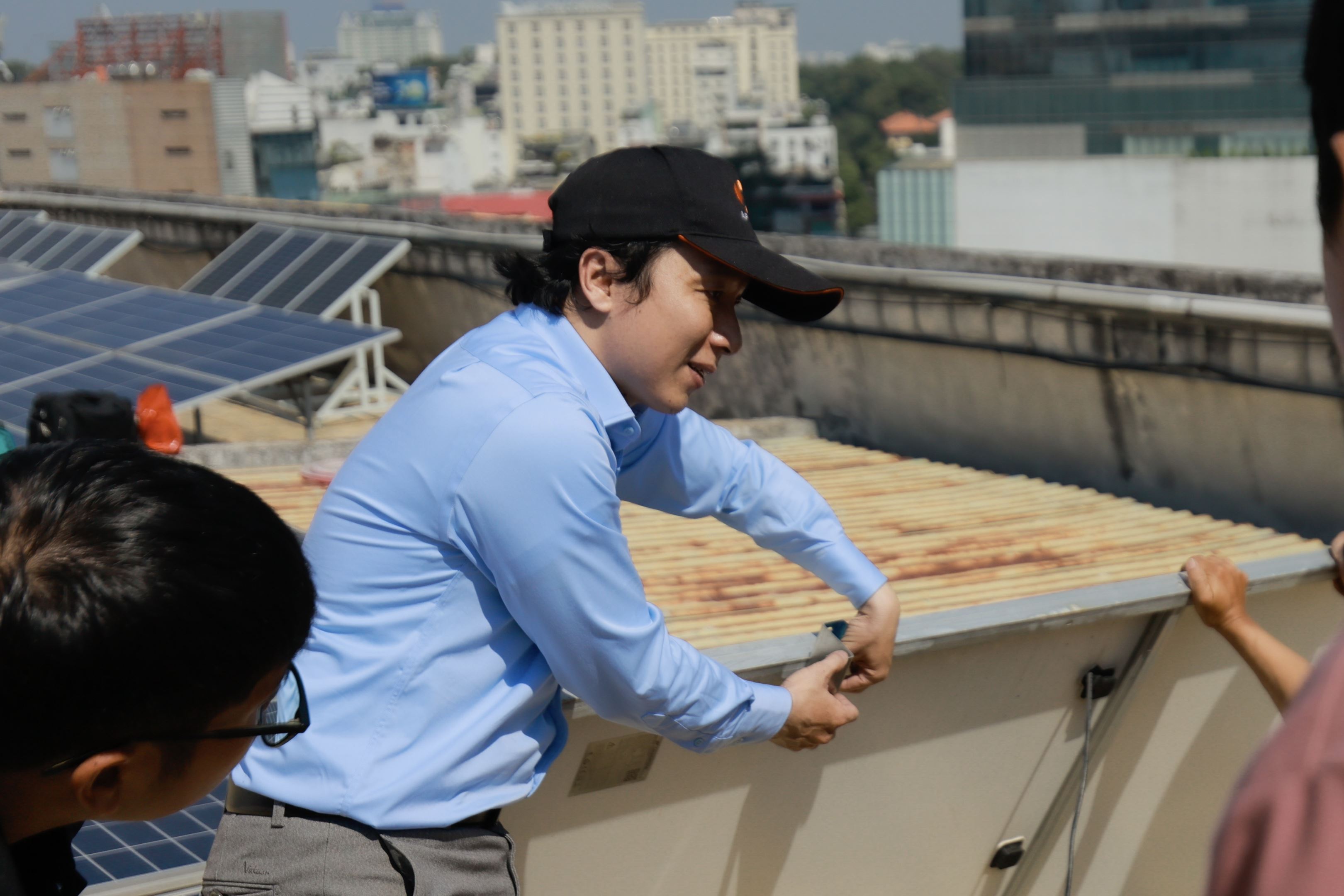
Dr. Ngo Phi Thuong, Lecturer at Faculty of Electrical and Electronics Engineering, Cao Thang Technical College.
To proactively mitigate risks before the rainy and storm season, users should inspect the condition of PV panels, mounting frames, and connection points; apply waterproofing measures to roof installation sites where necessary; and check protective devices, particularly overvoltage protection equipment. Areas at risk of water entering the house, as well as the inverter and electrical cabinet, should also be inspected. Additionally, outdoor cables must be securely fastened, tree branches trimmed, and any objects that could be blown by the wind or strike the system removed.
During storms, do not climb onto the roof or operate electrical equipment in damp or flooded areas. If the system needs to be shut down due to a malfunction or flooding risk, follow the prescribed shutdown and isolation procedures.
According to experts, inspections and maintenance should be carried out regularly and after periods of severe or unusual weather. Inspection and repair records should also be kept to monitor the condition of the system over time.
Some External Signs of Damage to Rooftop Solar Power Systems to Watch:
- Cracked or deformed photovoltaic panels, displaced panels, or trees and other objects that have fallen onto the panel surfaces.
- Steel frames, aluminum rails, and roof attachment points that are loose or deformed; areas of the roof showing signs of water leakage.
- Cables, protective conduits, and connectors that have come loose, broken, or been damaged, or have fallen out of their original installation positions.
- Inverters, electrical cabinets, and energy storage batteries showing signs of water ingress, overheating, a burning smell, unusual noises, or warning indicators.
(Consultant: Dr. Ngo Phi Thuong, Lecturer, Faculty of Electrical and Electronics Engineering, Cao Thang Technical College)
Translator: Đình Nam
Share