Attending the meeting on behalf of the lenders were representatives from the French Development Agency (AFD) in Vietnam, Proparco (AFD's development finance institution), CDP (a non-profit organization focused on global environmental impact), KfW Development Bank (Germany), the Japan International Cooperation Agency (JICA), and the European Investment Bank (EIB).
On behalf of EVN, EVN Vice President Nguyen Dinh Phuoc chaired the meeting, with the participation of representatives from EVN's functional departments and EVN Power Project Management Board No. 3 (EVNPMB3), the project management unit.
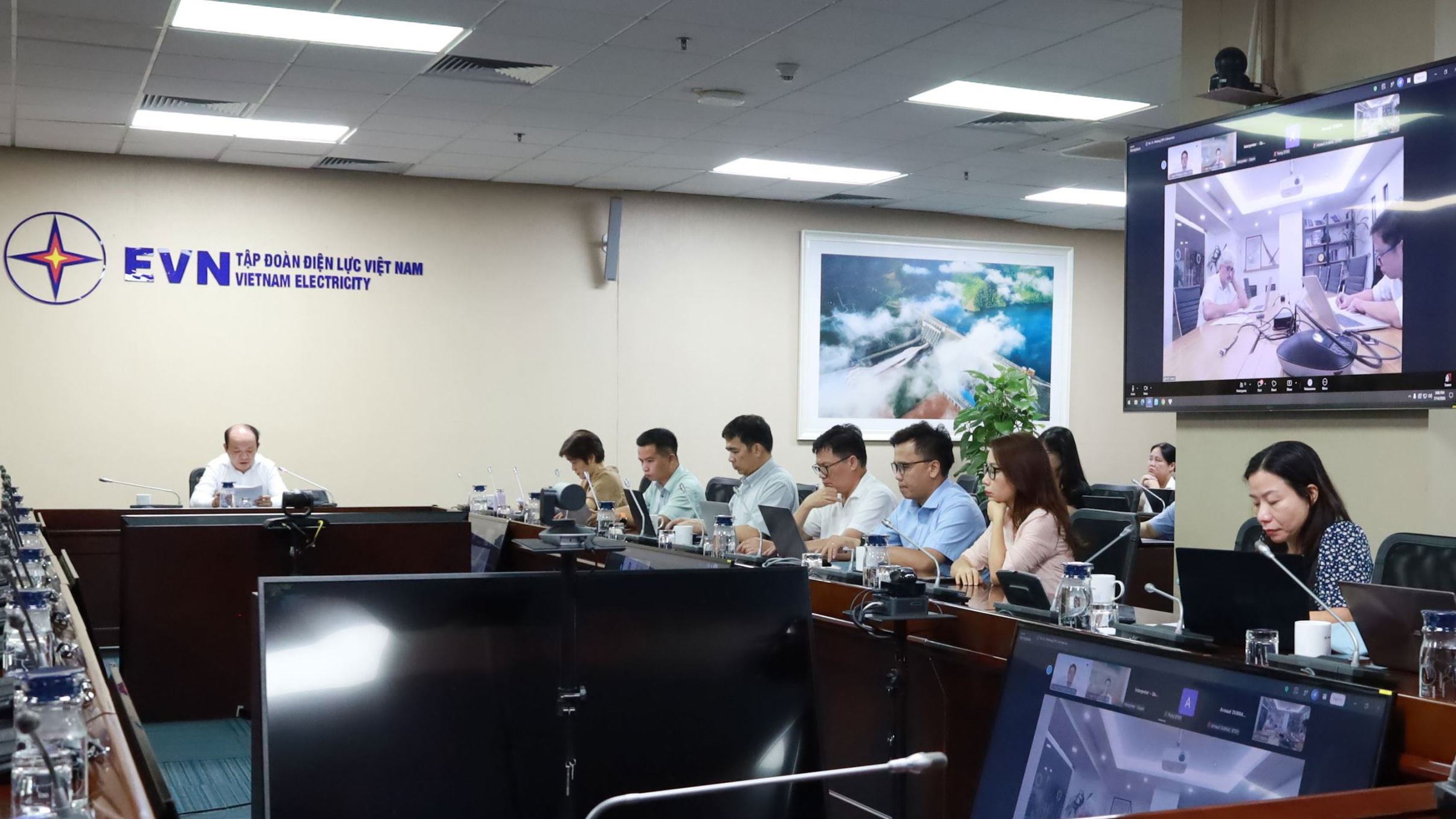
The meeting holds online, connecting EVN Headquarters with participating organizations.
During the meeting, the parties reviewed the progress in fulfilling the conditions precedent for loan disbursement, with particular focus on the signing of the Asset Mortgage Agreement. According to EVN, waiting for all six lenders to complete their internal approval procedures before signing a single mortgage agreement could delay loan disbursement and affect the project's financing schedule. EVN therefore proposed signing separate mortgage agreements with lenders that are ready, while committing to promptly provide the official legal documents for the lenders' consideration and implementation.
Regarding environmental and social (E&S) requirements, EVN reported that biodiversity protection measures have been proactively incorporated into the bidding documents. EVN has also completed its obligation to pay compensation for replacement forest planting and plans to fully fulfil its obligations related to forest environmental services payments once the Bac Ai Pumped Storage Hydropower Plant enters commercial operation.
EVN also discussed with the lenders several issues that require further alignment due to differences between the lenders' requirements and Vietnamese legal regulations, particularly concerning expenditures outside the total investment budget approved by the competent authorities.
Speaking at the meeting, EVN Vice President Nguyen Dinh Phuoc reaffirmed EVN's commitment to seeking practical solutions to resolve outstanding issues while maximizing compliance with the loan requirements in accordance with Vietnamese law. In the coming period, EVN will send an official letter to all six lenders clearly identifying the activities already completed, clarifying the responsibilities of local authorities, and outlining the remaining issues requiring further discussion due to differences in legal frameworks. This will provide an important basis for the lenders' assessment and support the shared objective of completing the loan procedures and successfully implementing the financing for the Bac Ai Pumped Storage Hydropower Project.
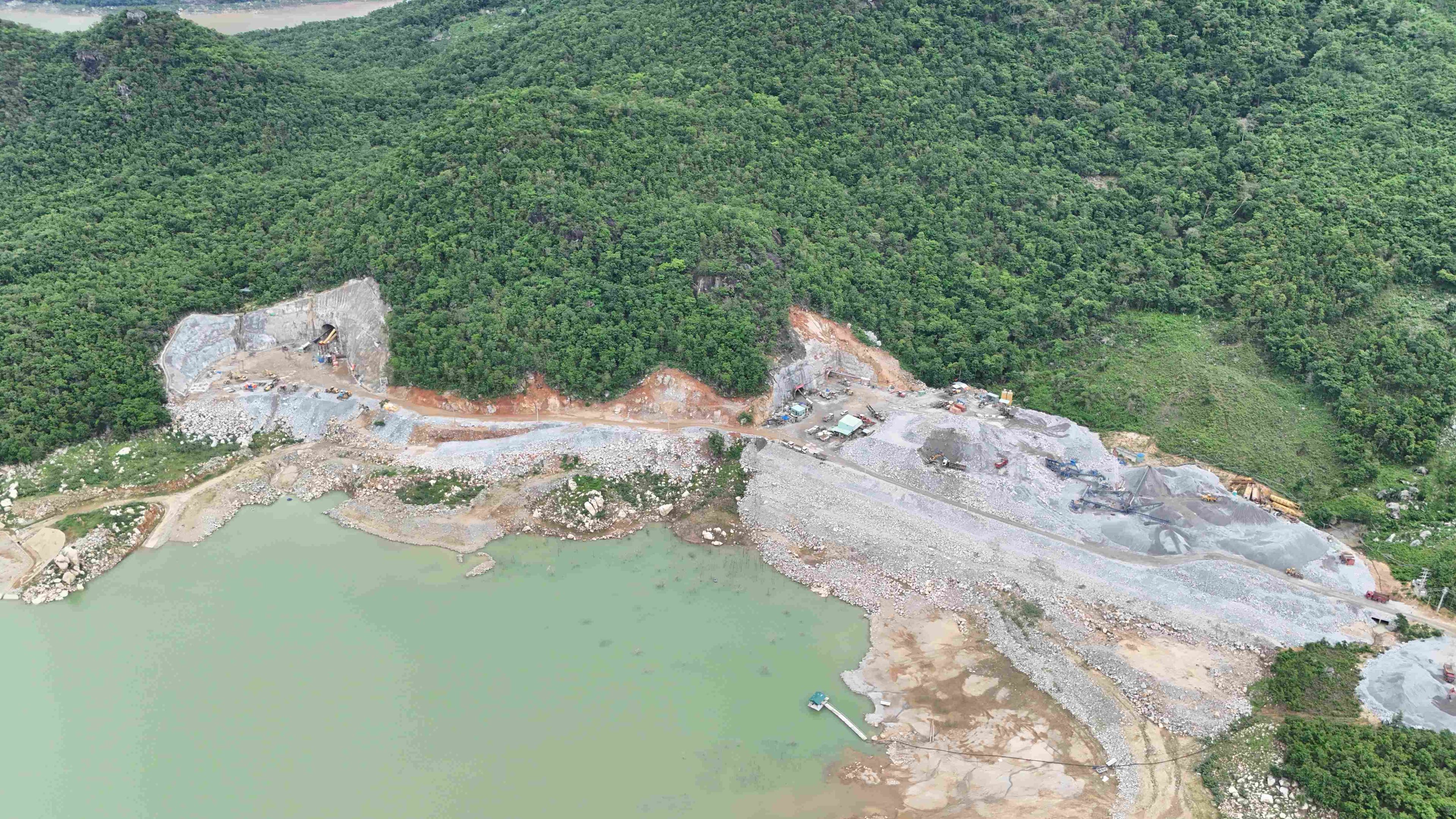
Construction site of Bac Ai Pumped Storage Hydropower Project, photographed on 1 July 2026. Photo: Ngoc Linh.
The Bac Ai Pumped Storage Hydropower Project has a total installed capacity of 1,200MW, comprising four 300MW generating units, with a total investment of VND 21.101 trillion. The project is located in Bac Ai Tay Commune, Khanh Hoa Province and is included in the list of power generation projects approved in principle by the Prime Minister. EVN has appointed EVNPMB3 as the project owner's representative. Under the current schedule, the four generating units are expected to be commissioned in December 2029, April 2030, August 2030, and December 2030, respectively.
The project plays an important role in the national power system, particularly as increasing amounts of renewable energy, including solar and wind power, are integrated into the grid. Its primary function is to supply electricity during peak demand periods, helping flatten the system load curve by pumping water during off-peak hours and generating electricity during peak hours.
As Vietnam's first pumped storage hydropower project, it will not only provide significant technical benefits for power system operation but also contribute directly to reducing greenhouse gas emissions in the power sector, in line with the Vietnamese Government's commitment to achieving net-zero carbon emissions by 2050.
Translator: Mỹ Linh
Share