Attending the opening session on the morning of April 1 were Mr. Nguyen The Huu, Deputy Director General of the Electricity Authority under the Ministry of Industry and Trade. From EVN, participants included President and CEO Nguyen Anh Tuan; Standing Deputy Secretary of the EVN Party Committee Nguyen Huu Tuan; Member of the Board of Directors Dang Huy Cuong; and EVN Vice President Nguyen Tai Anh.
The training program was held in a hybrid format, both in person and online, with the participation of experts, speakers, representatives from professional organizations, training institutions, enterprises, and international partners from South Korea, Japan, the ASEAN Centre for Energy (ACE), the International Atomic Energy Agency (IAEA), and representatives of power sector units across ASEAN countries.
This event provided an opportunity for stakeholders to exchange views on nuclear power development roadmaps, share international experiences, and update information on the necessary conditions for preparing the development of this energy source.
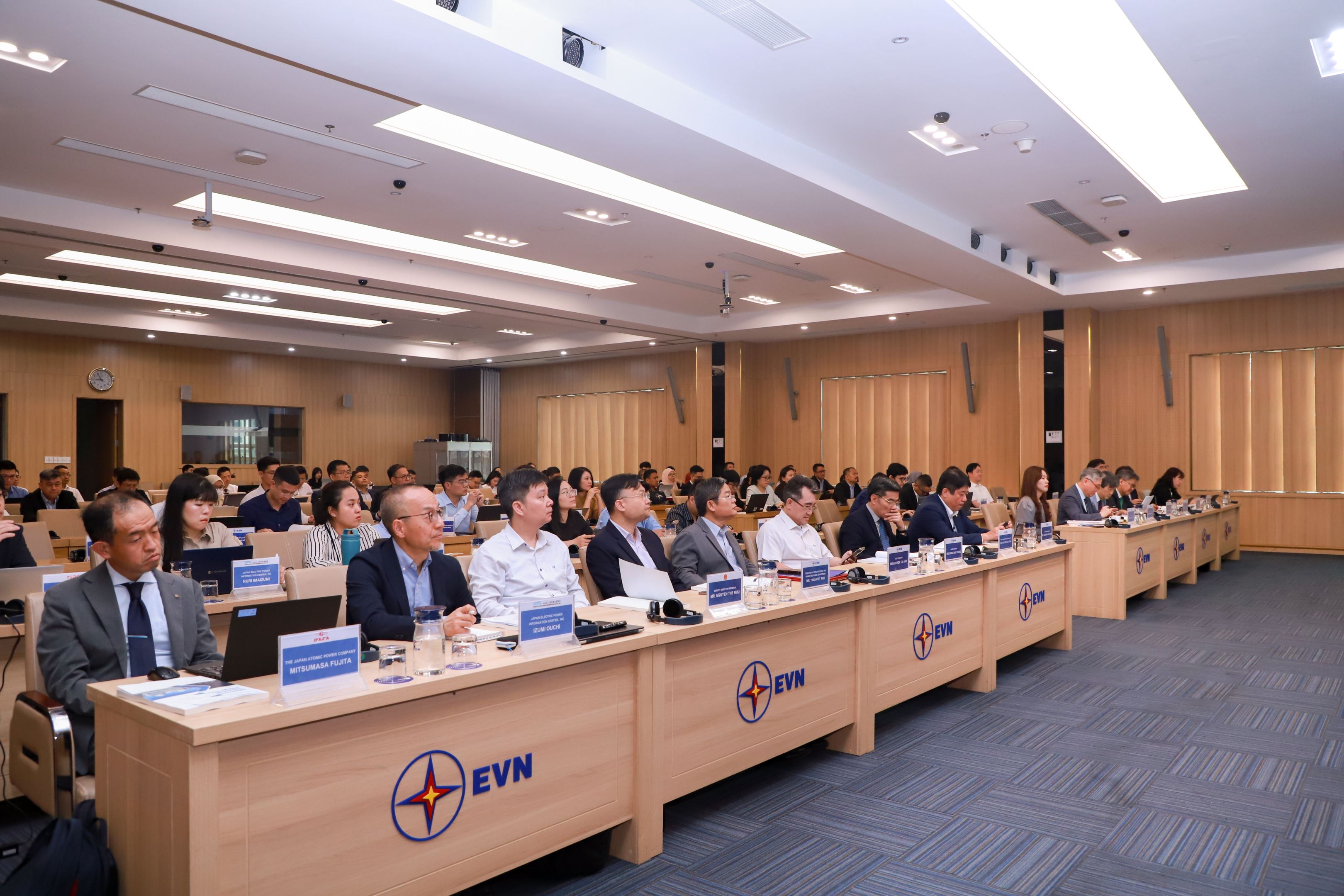
Delegates attend program on morning of April 1 at EVN headquarters
EVN Vice President Nguyen Tai Anh stated that as Vietnam has set the goal of achieving net-zero emissions by 2050, the demand for clean, stable baseload power sources with low carbon emissions is becoming increasingly urgent.
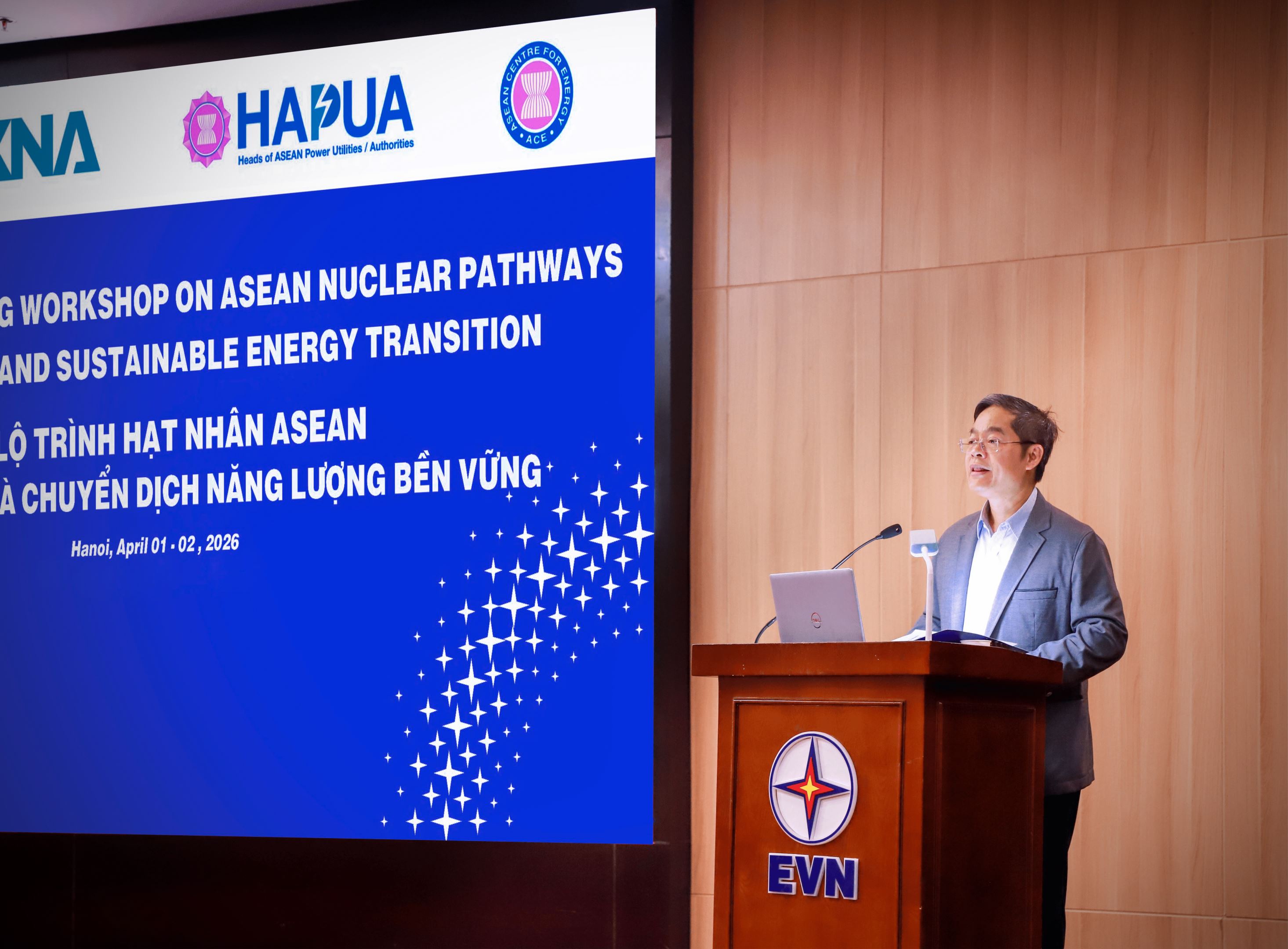
EVN Vice President Nguyen Tai Anh delivers remarks
The EVN leader noted that Vietnam is gradually restarting its nuclear power development program in a cautious manner, focusing on preparations in terms of policies, institutional frameworks, management capacity, and international cooperation. In this context, the training program is not only significant for EVN and domestic stakeholders but also serves as an opportunity for power sector agencies across ASEAN to learn from international experience and expand dialogue on the necessary conditions for long-term nuclear power development.
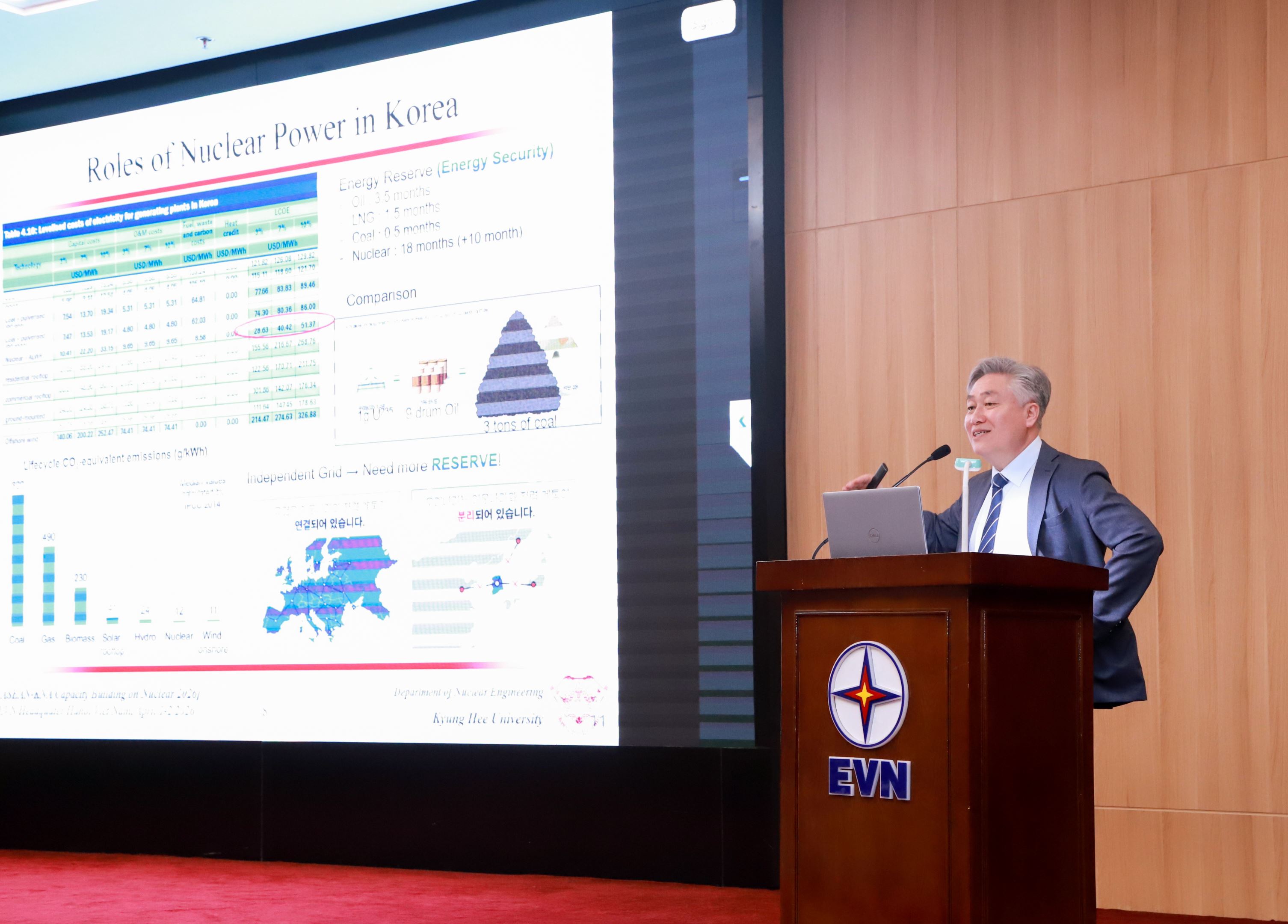
Professor Bum-Jin Chung, Professor at Kyung Hee University, presents at program
According to the agenda, over the two-day training program, delegates focused on a wide range of in-depth topics, including the role of nuclear power in the power system and industrial development; nuclear safety, legal frameworks, and waste management; nuclear power plant project development processes; contracting practices, procurement, and risk management; cost structures, financial models; and updates on nuclear power development progress in several ASEAN countries.
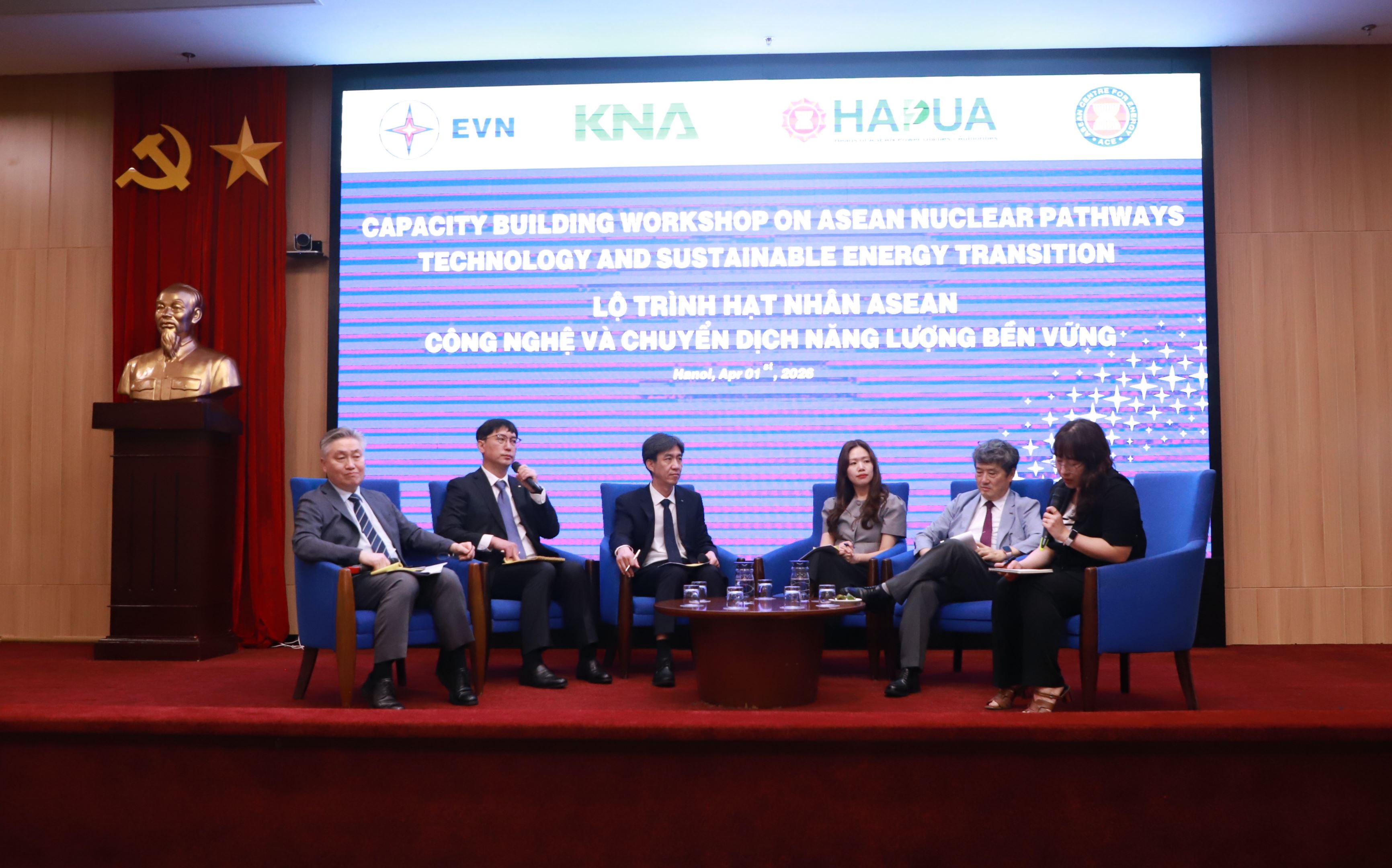
Delegates and speakers participate in discussion session within program
Through presentations, thematic discussions, and practical experience sharing, the program provided an opportunity to gain updated insights and perspectives from ASEAN countries regarding their plans, orientations, and readiness for nuclear power development in the coming period.
Translator: Vân Ly
Share