The meeting was attended by EVN’s specialized departments, power generation corporations, and thermal power plants within the Vietnam Electricity (EVN), along with representatives from the National Power System and Market Operation Company Limited (NSMO).
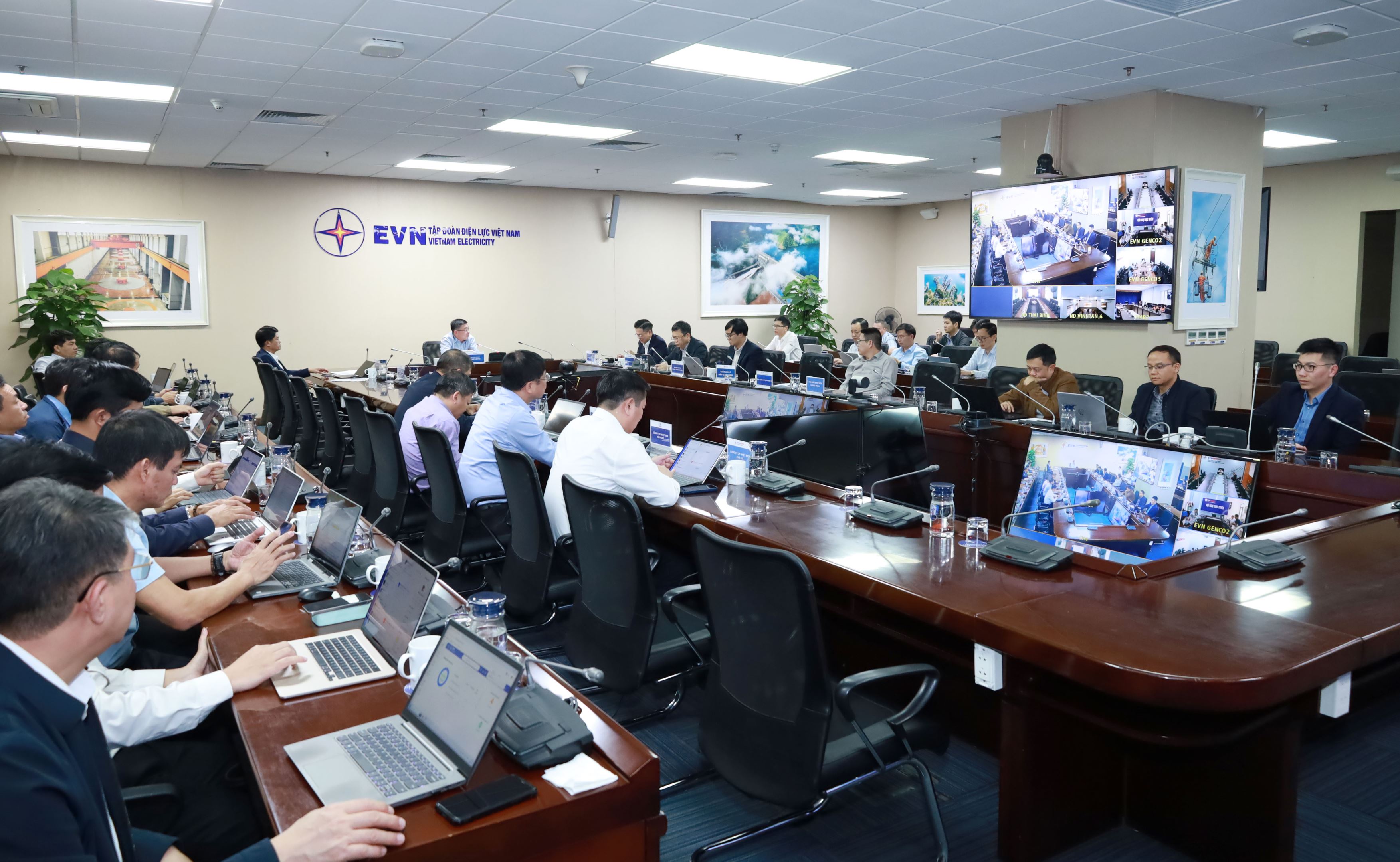
Delegates attending meeting
According to reports from EVN’s specialized departments and power generation units, the upgrade of flue gas treatment systems at thermal power plants is being implemented to comply with the new environmental regulation QCVN 19:2024/BTNMT on industrial emissions, which will officially take effect on January 1, 2032. Out of EVN’s 14 power plants, 30 generating units with a total capacity of 14,324MW are required to undergo upgrades. Currently, the units are focusing on preparing investment projects, completing technical documentation, and developing implementation plans at several key plants such as Hai Phong, Pha Lai 2, Quang Ninh, and Uong Bi.
At the meeting, representatives of the power generation corporations (GENCOs) and thermal power plants under EVN stated that they are urgently reviewing technical solutions, preparing materials and equipment, and developing suitable construction and implementation plans. Some units proposed integrating the upgrade items with the scheduled maintenance and major overhaul plans of generating units, while also studying phased implementation approaches. Under this approach, items that can be carried out while the units remain in operation would be implemented first, with a shutdown required only during the final connection stage. This approach aims to minimize unit downtime, ensuring both the progress of the upgrades and the stability of the power supply for the system.
EVN’s specialized departments also emphasized the requirement for close coordination with NSMO in developing unit shutdown plans that are consistent with actual system operating conditions. In addition, the upgrading of thermal power plants will be implemented in parallel with solutions to enhance the operational capability of the power system, such as accelerating the progress of key power grid projects, installing additional voltage support equipment, and studying the deployment of battery energy storage systems (BESS). These measures aim to improve the system’s ability to respond to dispatch needs when some generating units are temporarily taken offline to carry out environmental upgrade works.
Representative of Power Project Management Board 2 (left) and representative of NSMO (right) speaking at meeting
At the meeting, Mr. Nguyen Quoc Trung, Deputy General Director of NSMO, stated that EVN’s commissioning of the 500kV Circuit 3 transmission line from Quang Trach to Pho Noi has demonstrated its effectiveness in maximizing the transmission capacity of electricity from Central Vietnam to the North, particularly in situations when power plants must temporarily suspend operations for renovation and upgrading.
In addition, the NSMO Deputy General Director noted that, in the context of shutting down thermal power units for upgrades, BESS will serve as a strategic solution. These systems not only enable load shifting—charging during off-peak hours and discharging during peak hours—but also act as an effective tool for voltage control. With their rapid response capability, BESS can help stabilize the power system in sensitive areas when local thermal power sources are temporarily unavailable. To prepare for the critical period of 2026–2027, NSMO is urgently coordinating with EVN to calculate detailed installation needs, with the aim of recommending that the BESS investment be accelerated as soon as possible.
In the coming time, NSMO will continue to work closely with EVN to calculate system operation plans, update technical parameters, and support units in developing appropriate unit shutdown schedules, especially during the peak dry season when electricity demand increases sharply. At the same time, NSMO has also requested relevant units to prepare complete technical documentation, project timelines, and construction plans so that dispatch coordination can be carried out proactively and effectively.
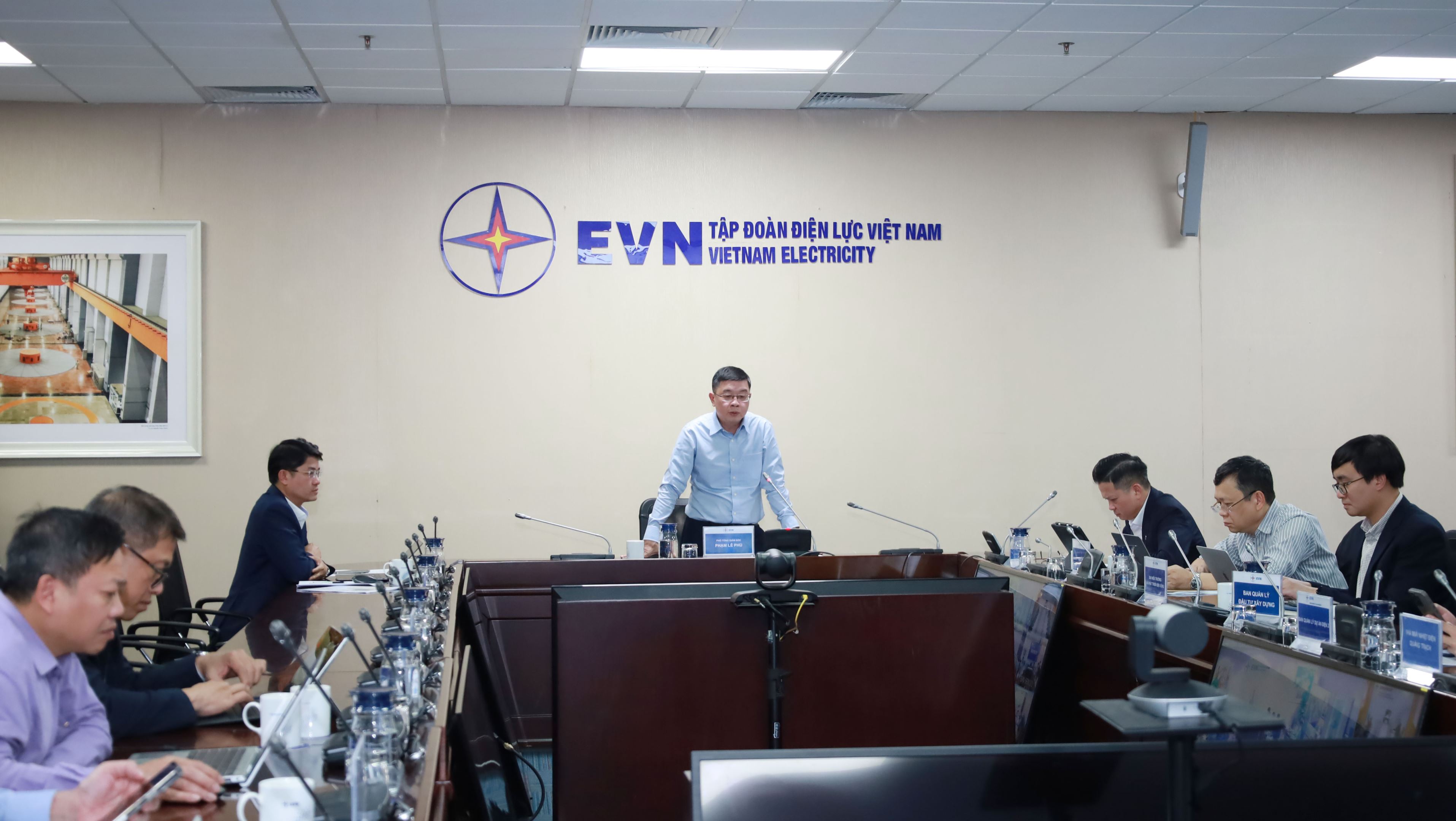
EVN Vice President Pham Le Phu delivers concluding remarks
In his concluding remarks, EVN Vice President Pham Le Phu emphasized that upgrading the flue gas treatment systems at thermal power plants is an important task associated with compliance with environmental protection regulations and the sustainable development orientation of the power sector. At the same time, the implementation process must be carefully planned to ensure that it does not affect the electricity supply for the national economy.
The EVN Vice President requested that the GENCOs and thermal power plants treat this as a mandatory task and urgently complete investment procedures, technical documentation, and contractor selection processes so that specific implementation schedules can be established as soon as possible. The units are also required to proactively study appropriate technical solutions and construction arrangements to minimize unit downtime. Priority should be given to carrying out upgrade items that can be implemented while the generating units remain in operation, with shutdown required only during the final connection stage.
Regarding the deployment of BESS, the EVN leadership agreed with NSMO’s assessment and requested that the company soon provide recommendations on capacity and proposed installation locations (at 110kV and 220kV substations) for the 2027 dry season in order to ensure timely investment.
The EVN Vice President also asked NSMO to continue coordinating closely with the Group’s units to develop appropriate power system operation plans, while flexibly adjusting unit shutdown schedules in line with the actual progress of the projects.
Translator: Vân Ly
Share