From hydropower, wind, and solar… to biomass energy
Experts assess that Dak Lak’s renewable energy potential is very large and remains underexploited. First and foremost is energy from water resources. With terrain gradually sloping from west to east and an average total annual runoff of up to 13.5 billion cubic meters, Dak Lak has significant advantages for hydropower development.
The province has more than 17 rivers with catchment areas ranging from 100 to nearly 500km², creating ideal conditions for small and medium-sized hydropower projects. These projects help optimize both intra-provincial water resources and inflows from neighboring provinces. Next are wind and solar energy—two resources considered the “specialties” of this land of sun and wind.
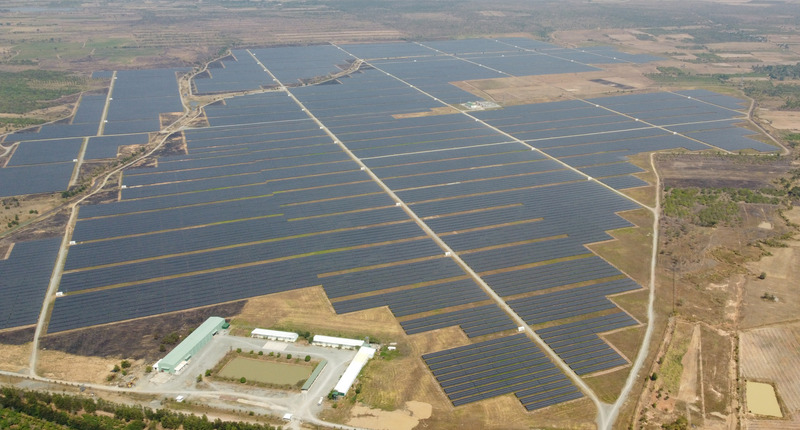
Solar power project of Xuan Thien Group in Dak Lak
According to recently published assessments of solar irradiation and wind energy potential, Dak Lak boasts impressive average wind speeds of 5–7m/s. With a high number of sunshine hours (from 2,000 to 2,500 hours per year), the province’s potential for solar power development is estimated at 2,080.8MW.
A distinctive advantage of Dak Lak lies in biomass energy. With a strongly developed agricultural base—particularly the sugar industry—the province possesses an enormous source of biomass feedstock from bagasse.
According to leaders of the Dak Lak Department of Industry and Trade, to date, the province has 25 hydropower plants in operation with a total capacity of 1,223.67MW; 16 grid-connected solar power projects and thousands of rooftop solar systems, along with wind power and biomass power projects. These projects make significant contributions to the state budget, create jobs for local workers, ensure national energy security, promote social welfare, and transform the province’s economic landscape.
Turning green and sustainable growth goals into reality
During the 2025–2030 period, Dak Lak plans to develop an additional 90 renewable energy projects with a total capacity of 7,780.5MW, focusing on 27 solar power projects and 42 wind power projects, alongside the introduction of waste-to-energy plants for municipal solid waste. Looking further ahead to the 2031–2035 period, the province will continue to plan 33 more projects with a combined capacity of over 6,100MW.
Over the next decade, the province is expected to reach nearly 14,000MW of renewable energy capacity, making a significant contribution to local economic growth and reaffirming the determination of the Provincial Party Committee for the 2025–2030 term to make renewable energy a driving industry, closely linked to a circular economy model and green growth.
In terms of planning and infrastructure, the province will develop the power supply network in parallel with socio-economic development orientations. It will create the best conditions for the power sector to upgrade transmission grids from 110kV to 500kV, apply smart grid technologies and automation in operations, reduce losses, and ensure grid security.
In addition, the province encourages the development of rooftop solar, floating solar, and wind power in advantageous areas. For hydropower, the province advocates selective exploitation, prioritizing pumped-storage hydropower projects and the use of water discharged from irrigation works to protect the ecological environment, while also promoting cogeneration biomass power and waste-to-energy projects. This “dual” solution both addresses environmental challenges and maximizes added value from agricultural production.
Translator: Vân Ly
Share