Attending the working session, on the side of the Korea Electric Power Union (KEPU), there was Mr. Choi Cheol-ho - KEPU President, along with members of the delegation, including the Vice President of KEPU, Presidents of the Trade Unions of member Power Companies, and representatives from KEPU's specialized departments.
On the side of Vietnam Electricity (EVN), there was Mr. Pham Hong Phuong – Vice President of EVN. On the side of the Vietnam Electricity Trade Union (VETU), there was Mr. Do Duc Hung - VETU President, along with VETU Vice Presidents, and representatives from VETU's specialized departments.
At the working session, the two sides exchanged information regarding the organizational model and operations of KEPU and VETU; experience, and vision in their activities. Prominently featured was the role of protecting the legal rights and interests of employees of the power industries in both countries.
Representing VETU, VETU President Do Duc Hung stated that the trend of digital transformation and the development of artificial intelligence (AI), along with the demand for an energy transition towards "green, clean, and sustainable," are strongly impacting the operations of the Power sector in both countries. Therefore, the work of developing trade union members in Korea and Vietnam is also changing to meet practical requirements. To meet the energy growth demand for socio-economic development, every employee in general and union member in particular will have to make much greater efforts. The VETU represents nearly 98,000 members working within EVN, and each EVN unit has a corresponding grassroots Trade Union level directly under it, ensuring close operational engagement with the employees of each unit.
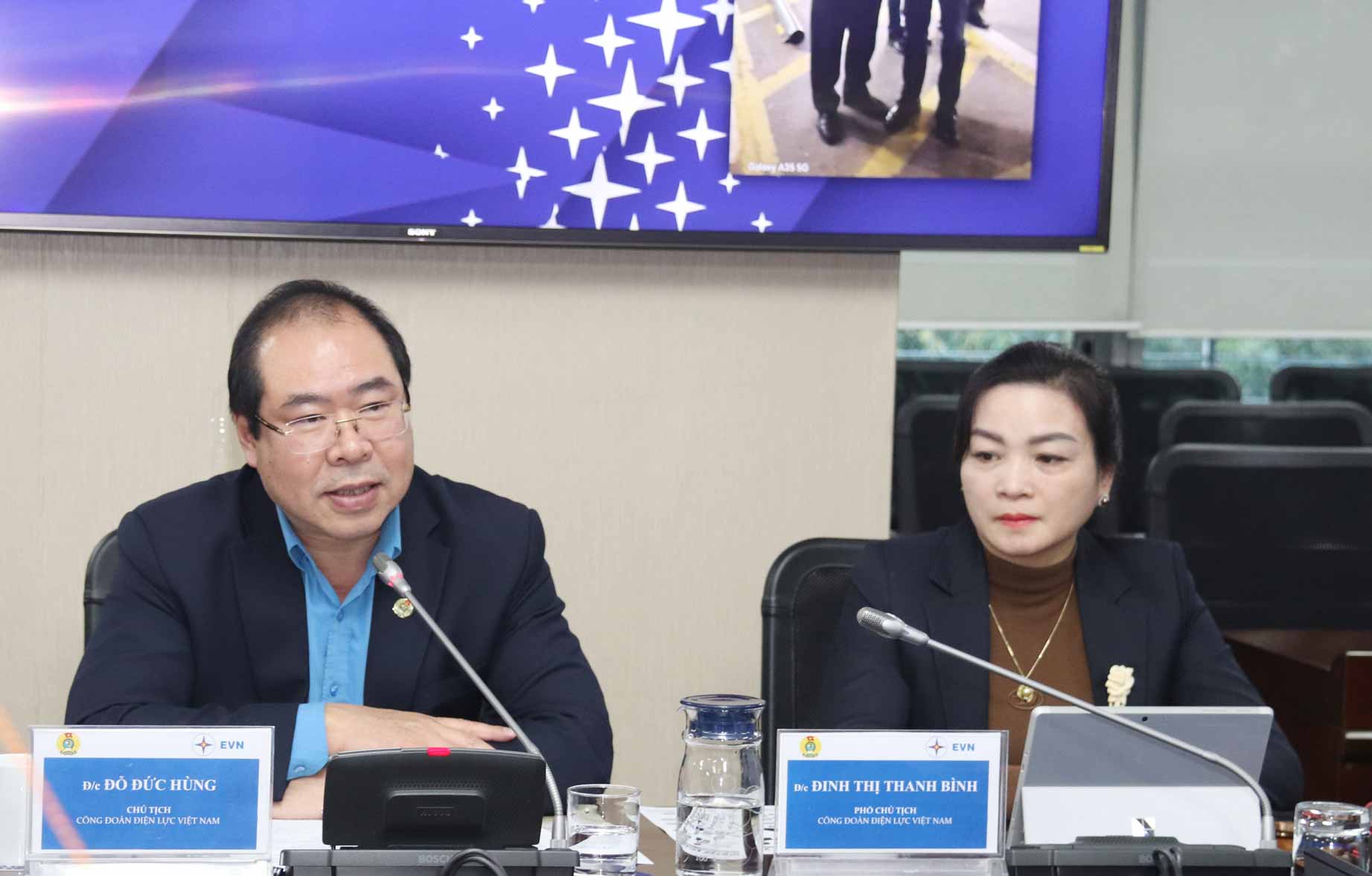
VETU President Do Duc Hung (left) speaks at meeting
To further clarify the overview of the VETU within the common development goal of Vietnam's Power sector, Vice President Pham Hong Phuong informed the Korean delegation about the preliminary organizational structure and operations of EVN, highlighting its role as the key State-owned enterprise in power generation and distribution. After nearly 71 years of formation and development, EVN currently manages about 20 million electricity customers across the country. The EVN's leadership emphasized that, in addition to the task of generating and supplying electricity, Vietnam Electricity is also assigned many important political tasks by the State and the Government to promote the country's socio-economic development, especially the responsibility of bringing electricity to rural areas, remote areas, borders, and islands. With this mission, EVN has provided electricity to about 99% of households, a high rate in the region. On average, EVN spends about 5 billion USD annually on investment and construction of power projects to increase electricity output and quality of supply, meeting the ever-increasing demand.
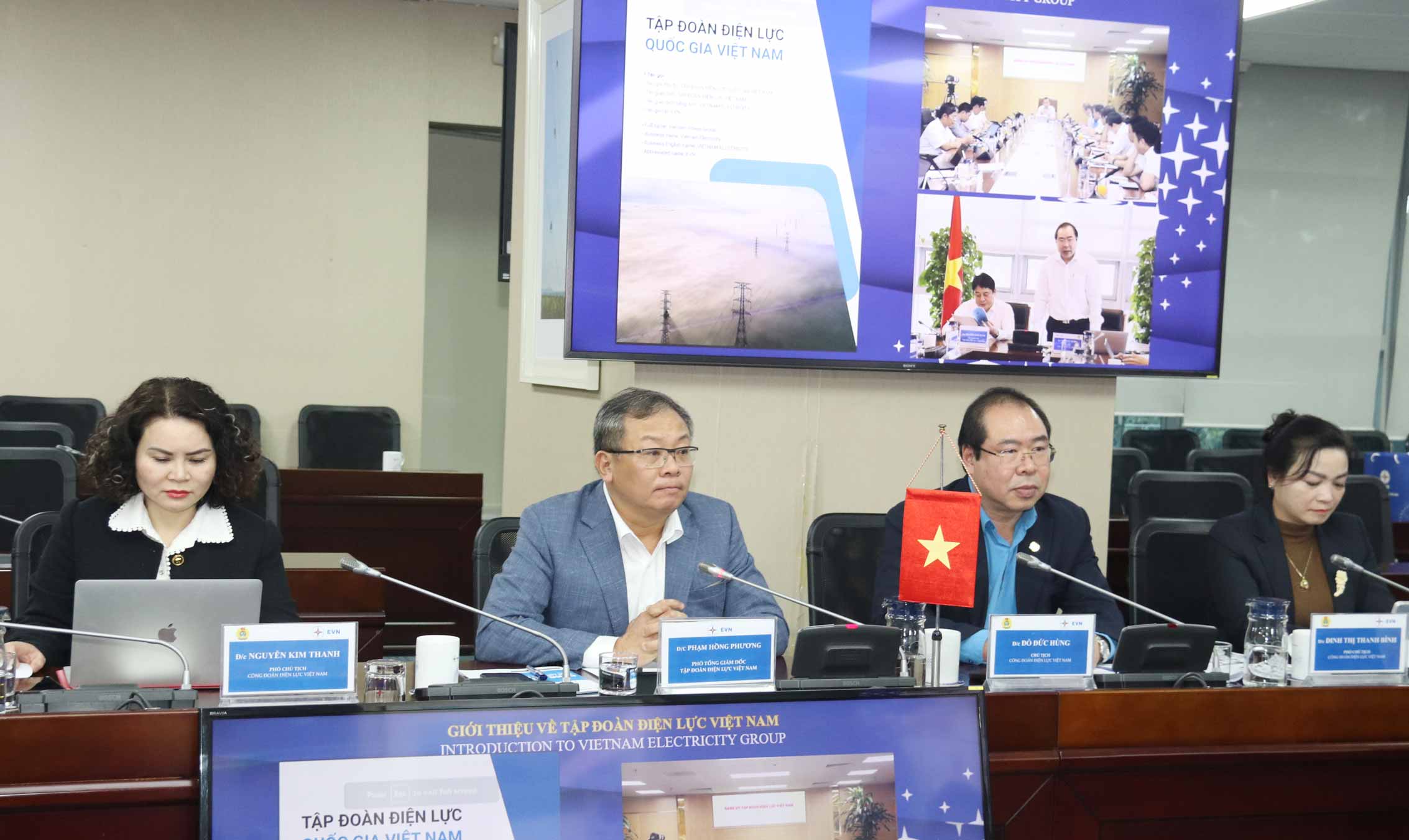
EVN Vice President Pham Hong Phuong (second from left) speaks at meeting
In addition, with Vietnam's commitment at COP26 to achieve the net-zero emissions target in 2050, the development of power sources that meet the criteria of green, clean, and sustainable is crucial. Vietnam in general, and EVN in particular, have been and are focusing on developing clean energy sources such as wind power, solar power, and soon, nuclear power. In parallel, in recent years, EVN has invested in technology to reduce emissions at thermal power plants, moving towards replacing coal with cleaner fuels.
On the side of the KEPU, President Choi Cheol-ho stated that the KEPU was established on November 24, 1946, representing the interests of 17,695,000 members (as of June 2024); consisting of 38 affiliated grassroots trade unions.
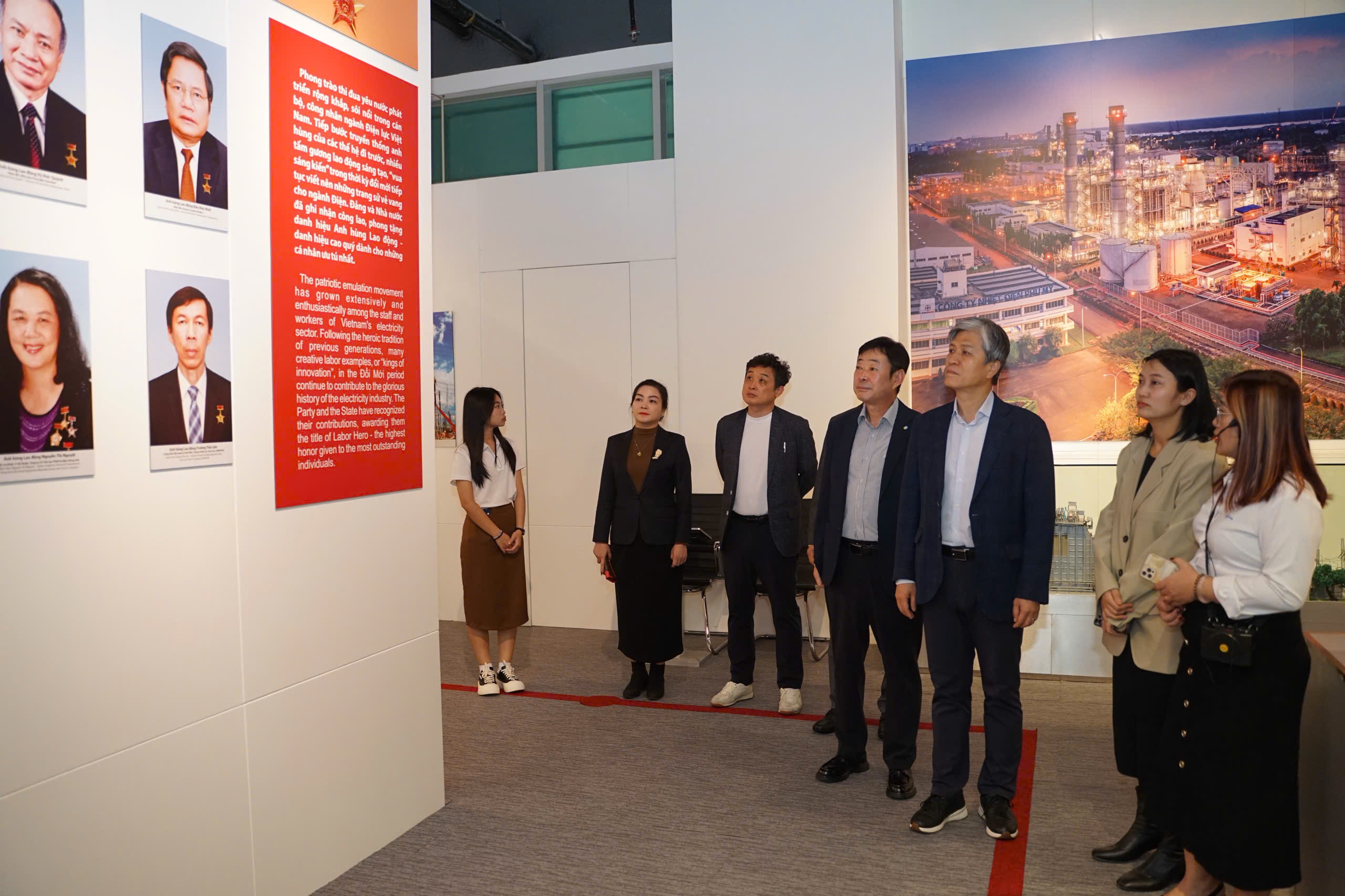
KEPU delegation visits Traditional House of Vietnam Electricity Sector. Photo: M.Nghia
Translator: Vân Ly
Share