On January 30, in Hanoi, Vietnam Electricity held the Technical and Safety Management Conference in 2026. Mr. Dang Hoang An, Secretary of the Party Committee and Chairman of the EVN Board of Directors, attended and delivered a directive speech.
Delegates attending 2026 Technical and Safety Management Conference, January 30, 2026
Achieving and surpassing many important targets
According to the report of EVN's Technical and Safety Department, in 2025, amidst a volatile global economic and political landscape and extreme weather events, EVN ensured the safe and stable operation of the power system, basically achieving the objectives of technical management and safety, contributing to meeting the power supply requirements for socio-economic development and people's lives.
In the field of power generation, EVN's power generation corporations have operated safely and ensured the availability of generating units, contributing to ensuring a balance between power supply and demand during peak periods. The thermal power sector basically met the targets for auxiliary power consumption rate, forced outage rate, and availability factor; notably, the number of unit incidents and the time required to handle them decreased by 50% compared with the previous year. The hydropower sector also reported that most units met their assigned technical targets, efficiently utilizing water resources and contributing to a reliable power supply under complex hydrological conditions.
Regarding distribution grid management, the five Power Corporations within EVN continued to perform well in meeting power supply reliability targets. The failure rate of power lines and substations at all voltage levels basically met the plan; grid operation management was strengthened proactively and preventively, combined with the application of technology and the standardization of technical procedures. Power quality gradually improved, ensuring safe and stable power supply for important political and cultural events throughout the year, as well as serving the daily lives of the people.
For the transmission grid (220kV-500kV), the transmission grid reliability indicators of the National Power Transmission Corporation all met the targets assigned by EVN.
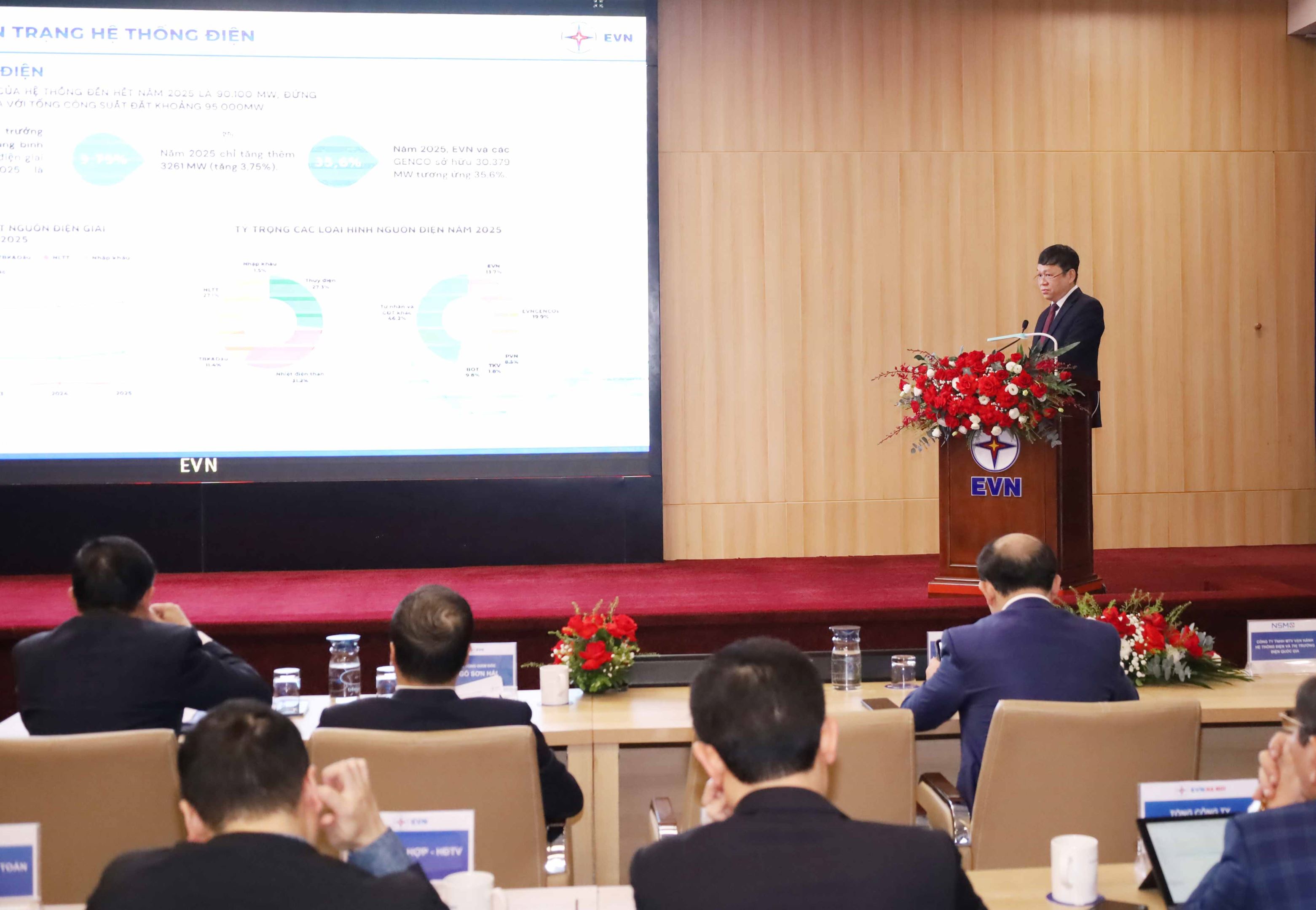
EVN's Head of Technical and Safety Department, Le Viet Hung, presenting report at conference
Ambitious targets, strong commitment
Based on the assessment of the results achieved in 2025, EVN has identified the main targets of technical and safety management in 2026 as continuing to closely coordinate with dispatching units to ensure sufficient electricity supply for socio-economic development, with a total electricity production and import expected to be between 350 and 369 billion kWh. EVN strives to continue improving technical indicators, including ensuring that the percentage of electricity used for transmission and distribution does not exceed 5.96%, and reducing the average power outage time per customer to approximately 210 minutes. At the same time, EVN will strengthen safety measures, significantly reduce labor accidents and violations of the power grid safety corridor, proactively prevent and mitigate natural disasters, and gradually build a sustainable occupational safety culture throughout EVN.
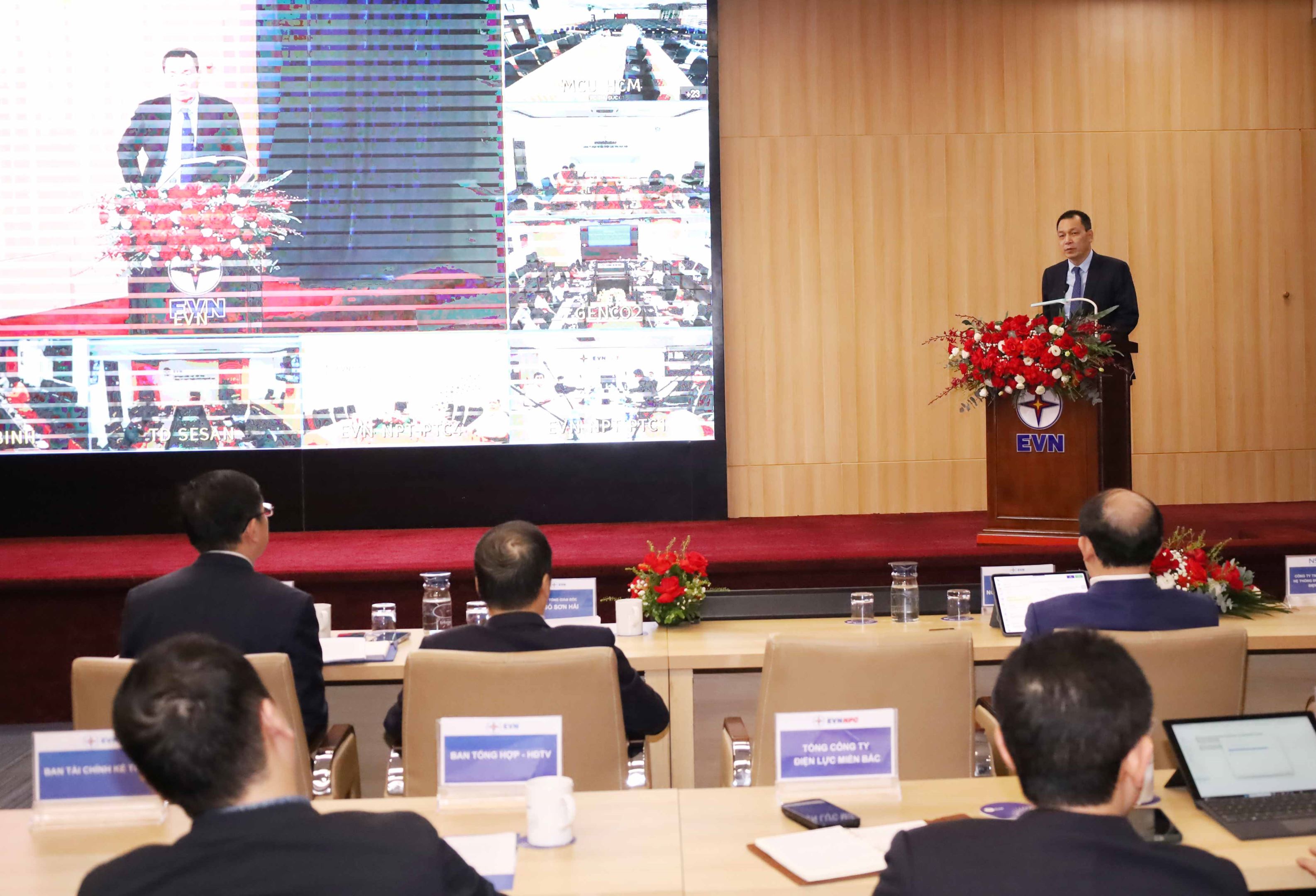
Party Secretary and Chairman of EVN Board of Directors, Dang Hoang An, delivering speech at 2026 Technical and Safety Management Conference on morning of January 30th.
Party Secretary and Chairman of the EVN Board of Directors, Dang Hoang An, emphasized that technical and safety management is a crucial area and a fundamental factor directly determining the safe, stable, and efficient operation of the power system. According to the Chairman of EVN Board of Directors, all activities, from power supply and improving customer service quality to production and business efficiency, depend on this work.
|
Some key objectives in the Technical and Safety Management work in 2026:
• Ensuring sufficient power supply for socio-economic development and people's lives
• Controlling power losses, ensuring the percentage of electricity used for transmission and distribution should not exceed 5.96%.
• Operating the power system safely and economically, minimizing power source and grid failures, and improving equipment availability
• Strengthening occupational safety
• Tightening management of power grid safety corridors
• Proactively preventing and responding to natural disasters, conducting search and rescue operations, and preparing response plans for extreme weather situations
• Fully complying with environmental regulations, linking technical and operational management with safety requirements and sustainable development
|
Translator: Thanh Hải
Share