Creating foundation for infrastructure development
According to a representative from the Son La Provincial Department of Industry and Trade, the province plans to develop its power sources by 2030 with a total capacity of approximately 10,200MW. Hydropower plays a leading role with 5,500MW, including 3,120MW of large hydropower, 900MW of pumped-storage hydropower, and 1,480MW of small hydropower. In addition, other renewable energy sources include 3,674MW of concentrated solar power, 980MW of wind power, 41MW of biomass power, and 7MW of waste-to-energy power.
As of December 2025, Son La province had put into operation 3,979MW out of 10,200MW of power generation capacity, reaching approximately 39% of the total capacity according to the approved plan. This includes 60 hydropower plants with a total capacity of 3,970MW, achieving 72.1% of the planned hydropower capacity. Large hydropower plants include Son La (2,400MW), Huoi Quang (520MW), Nam Chien (200MW), along with 57 smaller hydropower plants that have been and are operating effectively.
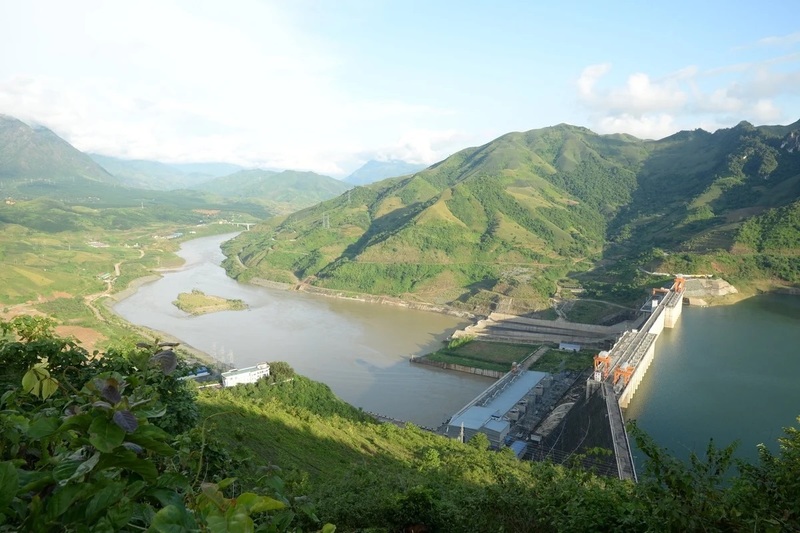
Son La Hydropower Plant
With 3,979MW of power generation capacity already in operation, Son La annually supplies the national power grid with 12-15 billion kWh, accounting for approximately 4-5% of the total national electricity production. This power source not only plays a crucial role in ensuring national energy security but also meets the power needs for socio-economic development in Son La province. Revenue from power production accounts for approximately 40-50% of the total budget revenue in Son La province.
Develop types of power sources that are in conjunction with plan
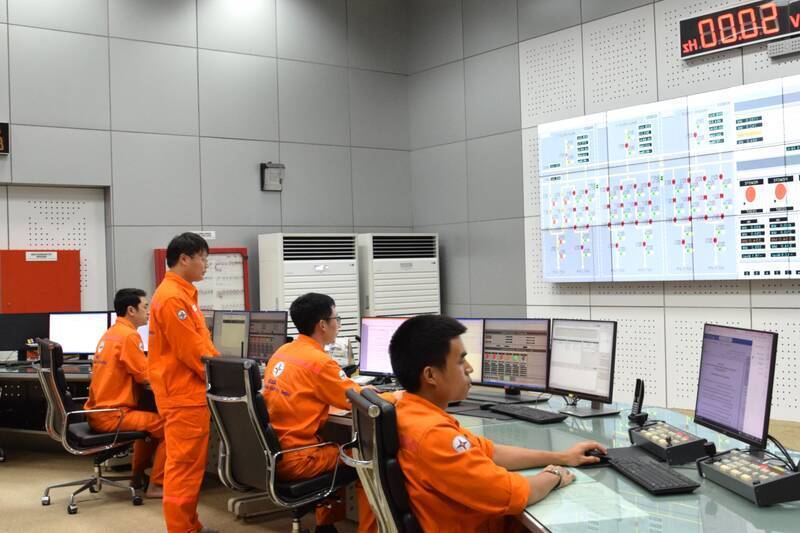
Workers at Son La Hydropower Plant operating plant's control system
Son La province is orienting its development towards power generation types that align with spatial planning, regional advantages, and the livelihoods of people in the project areas. For large hydropower plants, pumped-storage hydropower plants, and medium- and small-scale hydropower plants, Son La continues to maximize the capacity of existing plants such as Son La, Huoi Quang, and Nam Chien… Simultaneously, it is accelerating the progress of the Dong Phu Yen pumped-storage hydropower project and continuing to research and survey other efficient pumped-storage hydropower projects to propose their inclusion in the planning.
Furthermore, the development of small hydropower is carried out selectively, linked to environmental protection, planting and developing upstream forests, and developing the forest economy and carbon economy.
Regarding solar power, Son La province is orienting its development towards hydropower reservoirs, irrigation reservoirs, and areas with barren land unsuitable for agriculture. It is promoting solar power models integrated with high-tech agriculture, creating conditions for people to contribute land and participate in project operation.
Wind power is prioritized for development in areas with potential along the Da River basin, linked to tourism development. Biomass power is being studied for the expansion of the Son La sugarcane biomass power plant to 25MW, and a new 16MW plant is being built in areas with concentrated agricultural and forestry waste, and so on.
|
According to the Department of Industry and Trade of Son La province, developing renewable energy in conjunction with spatial planning, environmental protection, and climate change adaptation is not only an essential requirement but also a crucial political task for Son La province. This presents both an opportunity for Son La to exploit its existing potential and advantages, and a responsibility in implementing Resolution No. 70-NQ/TW of the Politburo and the Government's Power Development Plan VIII.
|
Translator: Nguyễn Thị Lan Anh
Share