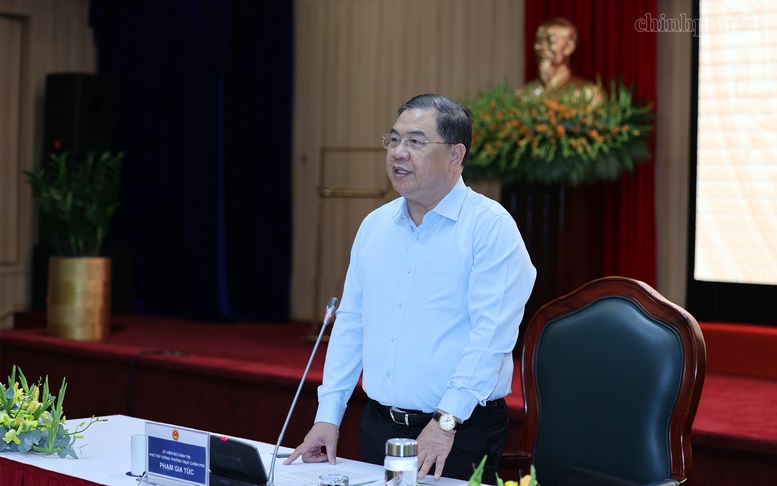
Standing Deputy Prime Minister Pham Gia Tuc speaking at working session with Vietnam Electricity – Photo: chinhphu.vn/Phuong Nguyen
Meeting power demand for high economic growth
In his opening remarks, Standing Deputy Prime Minister Pham Gia Tuc highly appreciated the contributions of the power sector over the past 72 years to socio-economic development, national defense and security, and the improvement of people’s living standards. He also recognized and commended the contributions of EVN and more than 97,000 officials, employees and workers across the power sector in recent years.
According to the Standing Deputy Prime Minister, as the country sets a high economic growth target, with science and technology, innovation and digital transformation serving as key drivers, the role of the power sector is becoming increasingly important. The development of data centers, high-tech industries and new manufacturing sectors requires a stable, high-quality and safe power supply at reasonable costs, with the ability to respond quickly to rising demand.
At the same time, the global situation remains complex and unpredictable, placing increasingly stringent requirements on energy security. If Vietnam is to become a new manufacturing hub in the region and participate more deeply in global supply chains, it must ensure the necessary foundations, with electricity being a key factor.
Under the development orientation for 2026–2030, Vietnam aims to maintain double-digit GDP growth, driving continued growth in electricity demand and placing significant pressure on the power system. The Standing Deputy Prime Minister said EVN and state-owned enterprises must continue to play a core role while effectively mobilizing resources from all economic sectors for power system development.
Regarding EVN’s restructuring, the Standing Deputy Prime Minister emphasized that this should not merely involve streamlining the organizational structure, but must be linked to the goal of building a stronger Group, mastering science and technology, enhancing competitiveness, and making more effective contributions to national energy development and economic growth.
The Standing Deputy Prime Minister asked EVN to identify the development of the Group into a strong, large-scale economic group with high competitiveness as a strategic and overarching objective. Accordingly, by 2030, EVN should strive to be among the three Vietnamese enterprises ranked in the world’s Top 500 largest companies, with the aim of achieving a high ranking rather than simply securing a place on the list.
According to the Standing Deputy Prime Minister, only a strong EVN will be capable of effectively performing its core and leading role in ensuring energy security and providing a stable, high-quality power supply for socio-economic development and people’s lives. Alongside strengthening its internal capabilities and maintaining autonomy in strategy, technology and governance, EVN should continue to receive support from the State in accordance with the law.
The Standing Deputy Prime Minister asked EVN to comprehensively assess its production and business operations, clearly identifying achievements, shortcomings and their causes, particularly its ability to ensure power supply during periods of high electricity demand. The Group should proactively participate in the adjustment of the National Power Development Plan VIII, identify shortcomings, improve the quality of load forecasting, and propose a feasible project portfolio to ensure synchronization between power generation sources and the grid.
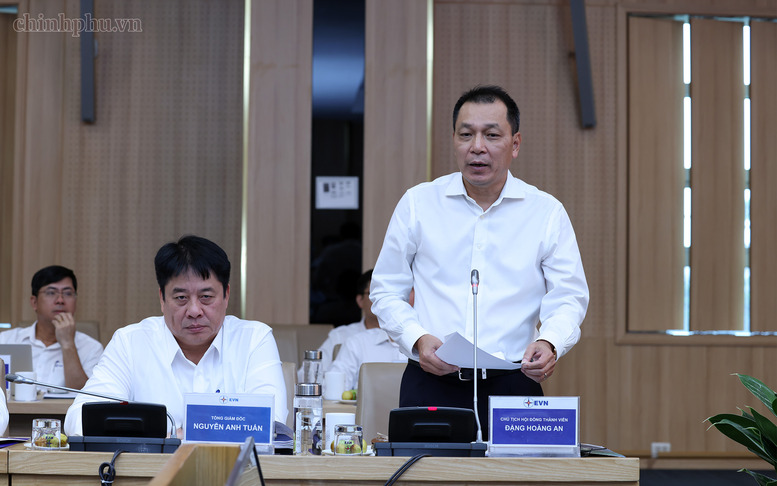
Chairman of EVN’s Board of Directors Dang Hoang An delivering report – Photo: chinhphu.vn/Phuong Nguyen
Increase generation capacity and accelerate power grid development
Reporting at the working session, Chairman of EVN’s Board of Directors Dang Hoang An said that during the first eight months of 2026, the Group focused on operating the power system and ensuring electricity supply for socio-economic development, while production and business indicators and the overall financial balance continued to improve.
Total electricity generation and imports reached 235.82 billion kWh, up 9.3% year on year; commercial electricity output reached 210.4 billion kWh, up 9.8%. Electricity demand increased sharply in May and June, rising by 12% and 14.53%, respectively, compared with the same periods of 2025; in the northern region alone, demand increased by 14.7% and 17.5%, respectively.
EVN’s economic and technical indicators for power supply reliability and power losses continued to rank among the top four ASEAN countries.
During the first eight months of the year, the Group’s estimated investment volume reached VND 76,820 billion, equivalent to 62.2% of the annual plan; disbursement reached VND 69,535 billion, or 56.3% of the plan. EVN commenced construction of 118 power grid projects at voltage levels from 110kV to 500kV and energized 116 projects.
Several important power generation projects continued to be implemented. Quang Trach I Thermal Power Plant is expected to be completed in 2026; the Quang Trach II LNG power project has signed its EPC contract and is expected to be completed in 2030; while the Quang Trach III LNG power project is completing procedures and aims to start construction in early 2027.
Regarding financial performance, Dang Hoang An said that following the difficulties encountered in 2022–2023, EVN implemented various measures to reduce costs, flexibly manage operations and restructure its activities. As of June 30, 2026, the Group had fully cleared the accumulated losses carried forward from previous years.
During the first eight months, the Group’s total revenue reached VND 482,042 billion, equivalent to 70% of the annual plan; estimated profit reached VND 12,215 billion, or 103% of the plan; and contributions to the state budget were approximately VND 17,160 billion, or 65% of the plan. Basic financial safety indicators were maintained, but the large capital requirements for power system development in the coming period call for greater capacity to mobilize long-term financing.
From now until the end of the year, EVN aims to ensure electricity supply under all circumstances, with electricity demand forecast to increase by approximately 10.5–12% over the final four months of the year. The Group targets completion of its 2026 investment plan, with total investment capital of VND 123,560 billion; focusing on completing power generation at Quang Trach I Thermal Power Plant, accelerating power generation projects, and implementing power grid projects under the adjusted National Power Development Plan VIII.
EVN will also continue to strengthen inter-regional and inter-zone transmission capacity and power import interconnections; develop smart grids and digital grids, real-time monitoring and control systems, and enhance the ability to integrate renewable energy sources.
The Group targets full-year 2026 profit of more than VND 13,500 billion and state budget contributions of more than VND 26,300 billion; while continuing to reduce costs, prevent waste, improve production and business efficiency, and generate additional resources for investment and development.
According to EVN, a major challenge to ensuring power supply in the coming period is rapidly increasing electricity demand while the pace of power source development remains uneven among investors. Some projects implemented by private-sector and foreign investors are still behind schedule, potentially affecting the timely addition of generation capacity in line with the power development plan.
Under the adjusted National Power Development Plan VIII, by 2030, the power system will need to add approximately 93,000MW of generation capacity, of which EVN has been assigned to invest in and complete approximately 6,066MW of generation capacity and around 1,700MW of energy storage systems. The remaining capacity will be developed by other investors, requiring decisive measures to ensure implementation progress.
As electricity demand continues to grow by approximately 10–12% annually, requirements for reserve capacity and safe power system operation are becoming increasingly stringent. Meanwhile, gas-fired power and offshore wind projects require substantial capital and have long payback periods, necessitating appropriate mechanisms to facilitate financing arrangements and promote investment.
EVN’s leadership also noted the mismatch in development schedules between generation sources and the power grid. Some wind and solar power projects can be developed within relatively short periods, while 220–500kV transmission grid projects require more time for investment procedures, site clearance and construction. Therefore, grid development needs to be accelerated to ensure synchronization with generation sources and avoid situations where power projects are completed before the transmission infrastructure is ready to accommodate them.
The Group proposed studying appropriate mechanisms to attract social resources for investment in transmission infrastructure, thereby reducing pressure on EVN’s investment capital amid substantial demand for power grid development.
EVN also noted that the proportion of generation capacity held by state-owned enterprises tends to decline, requiring the Group to further enhance its capabilities in power system management, dispatch, investment and coordination of power sources, thereby ensuring the core role of state-owned enterprises in the power system.
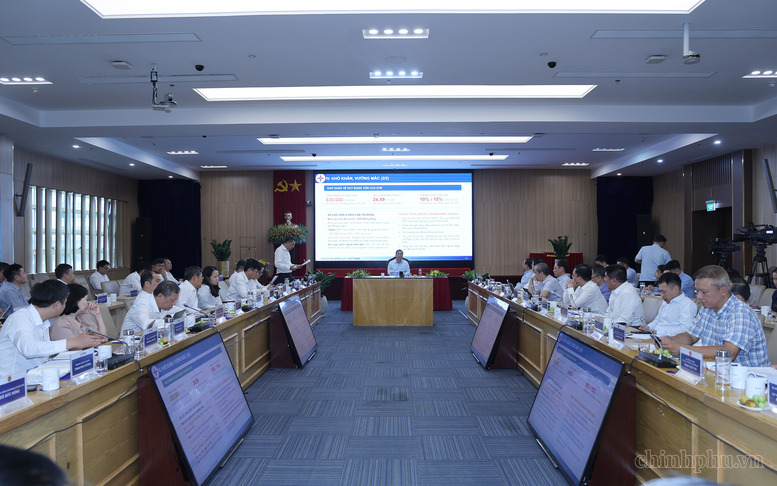
Dang Hoang An said that following the difficulties encountered in 2022–2023, EVN implemented various measures to reduce costs, flexibly manage operations, and restructure its activities. As of June 30, 2026, the Group had fully cleared the accumulated losses carried forward from previous years – Photo: chinhphu.vn/Phuong Nguyen
Restructuring toward enhanced capacity and efficiency
Regarding restructuring, the Chairman of EVN’s Board of Directors said the Group had proactively reorganized and streamlined its organizational structure, focused on its core business areas, and improved operational efficiency. The number of member units had been reduced from 82 in 2011 to 33 by the end of 2025.
EVN plans to continue playing a core role in power generation, transmission, distribution and electricity trading, while restructuring its business areas toward a streamlined and professional model and enhancing governance capacity and capital efficiency.
In power generation, EVN plans to continue safely and efficiently managing and operating power plants owned by the Group, while gradually restructuring its ownership ratios in certain power generation corporations according to an appropriate roadmap. In power distribution and electricity trading, the Group will continue to retain ownership of the Power Corporations and gradually separate the distribution and electricity retail functions in line with the roadmap for a competitive electricity market, while ensuring a stable power supply.
EVN also aims to develop a power consultancy unit capable of undertaking large-scale energy projects; maintain key electrical equipment manufacturing units while promoting deeper participation in the supply chains of major projects; and explore new business areas such as electric vehicle charging infrastructure, energy management, and digital platforms for power system operations.
By 2030, EVN aims to achieve total power generation and purchases of approximately 505 billion kWh and commercial electricity sales of 465 billion kWh, with total investment capital of around VND 830 trillion for the 2026–2030 period. EVN strives to rank among the top three power utilities in ASEAN in terms of economic and technical indicators and power supply reliability, and to become one of three Vietnamese enterprises among the world’s 500 largest companies.
EVN has identified the following key priorities: ensuring a safe and stable power supply; accelerating investment in power generation and grid infrastructure in line with approved plans; making breakthroughs in science and technology, innovation, and digital transformation; enhancing corporate governance; and developing human resources.
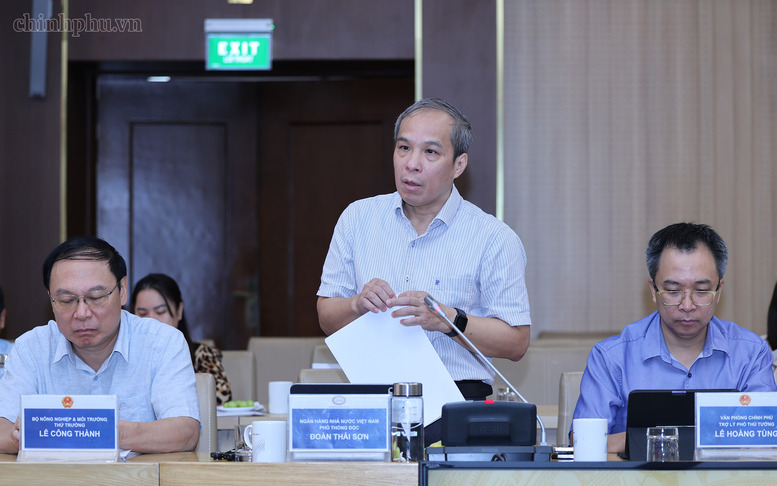
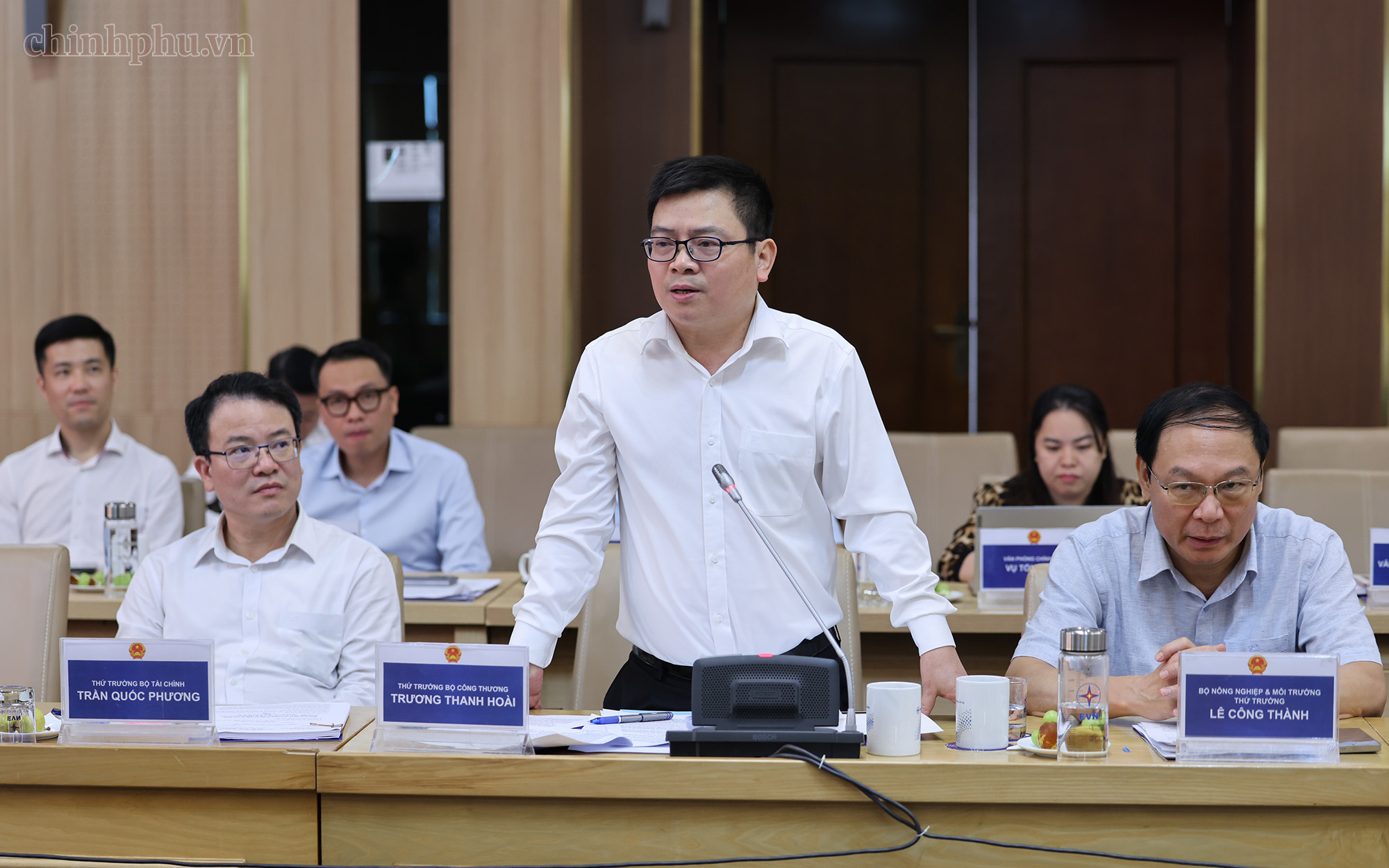
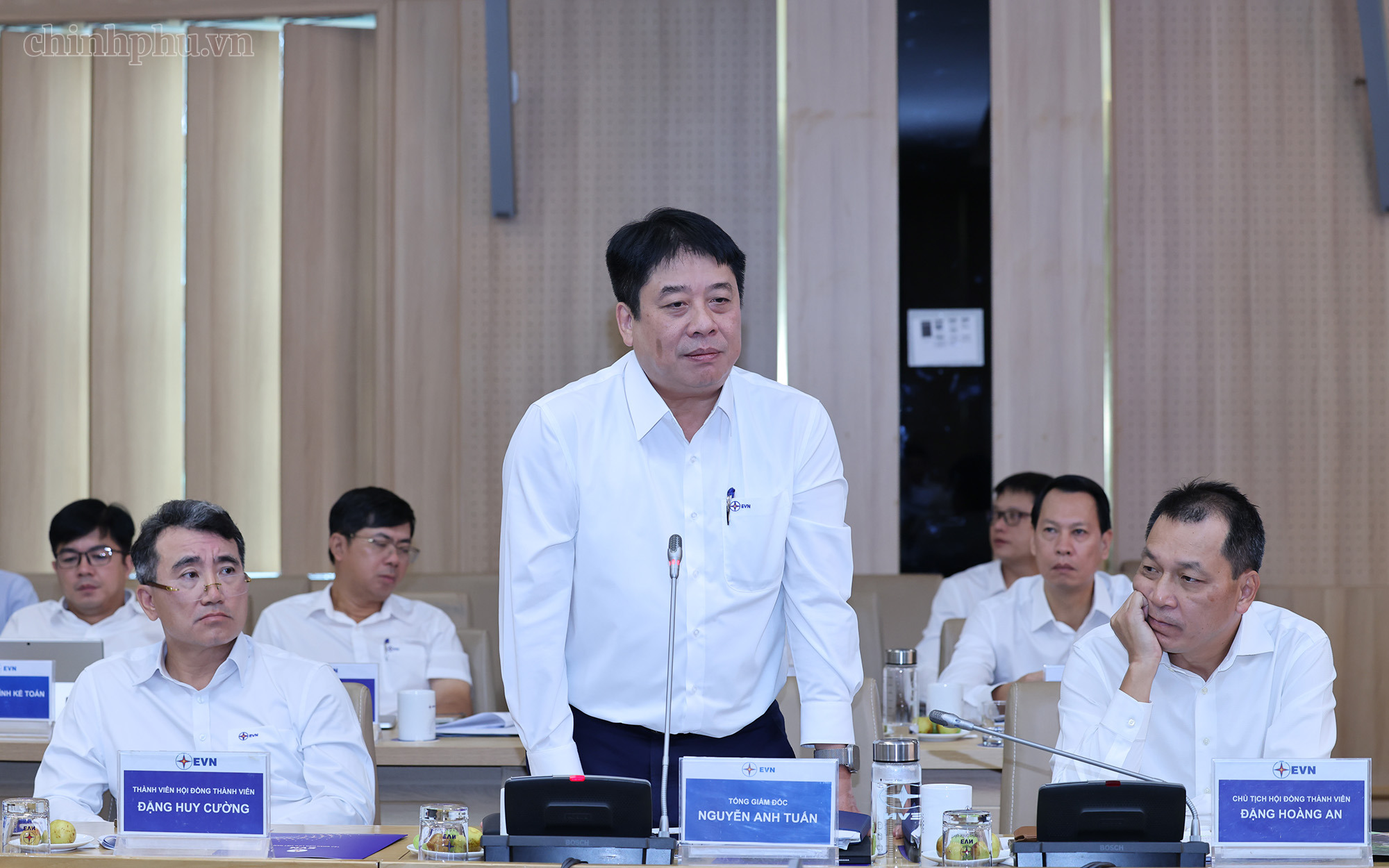
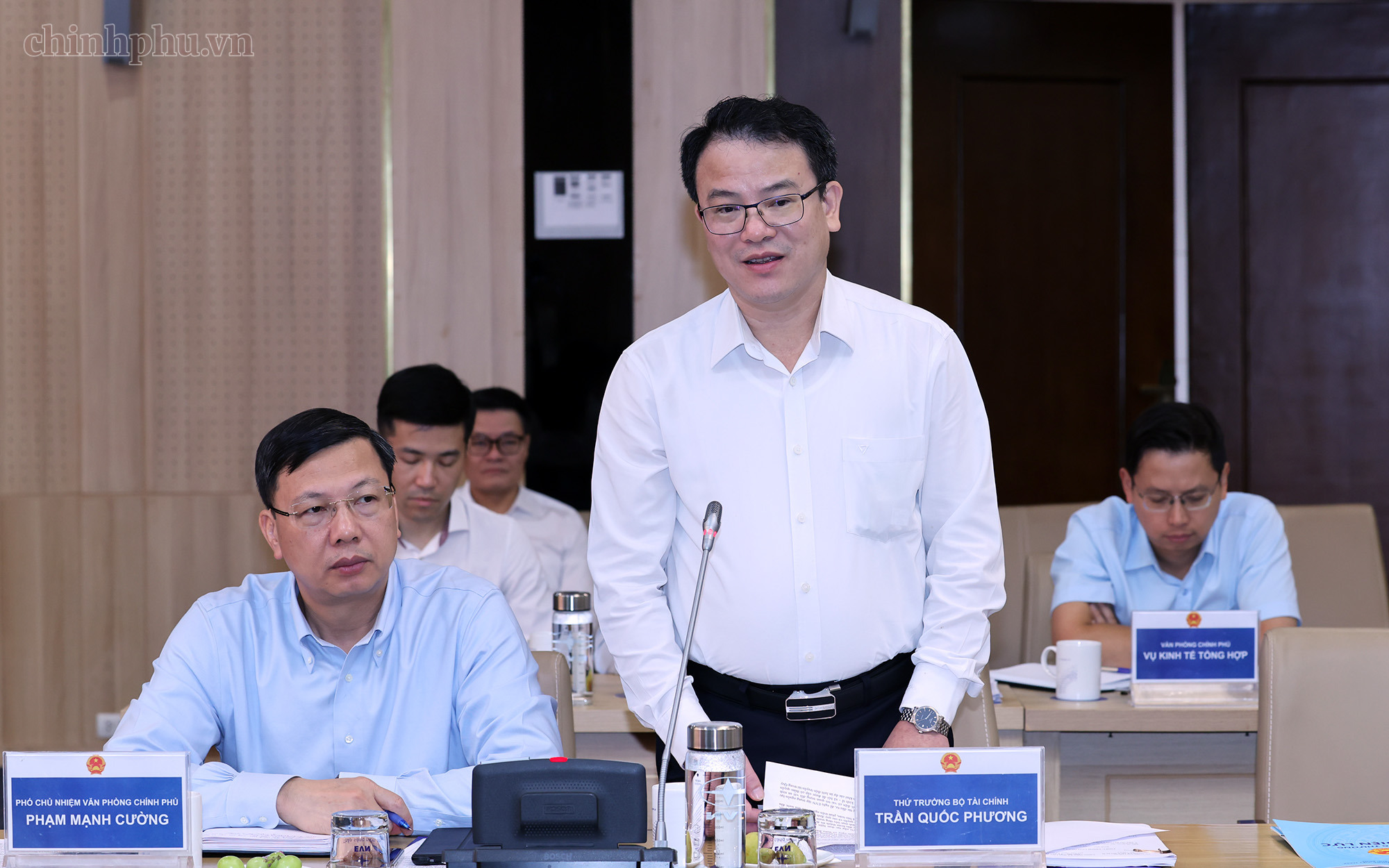
Leaders of ministries and sectors speaking.
Power supply is strategic issue in ensuring national energy security
In his concluding remarks, Standing Deputy Prime Minister Pham Gia Tuc once again acknowledged and commended the contributions of EVN, its officials, employees, and workers in the power sector to ensuring energy security and supporting socio-economic development and people's well-being.
Standing Deputy Prime Minister Pham Gia Tuc noted that the global and regional situation would continue to evolve rapidly and unpredictably in the coming period, while the demand for electricity to fuel high growth continues to rise. EVN must ensure a stable, safe, and high-quality power supply at reasonable cost, while also laying a solid foundation for socio-economic development.
The Standing Deputy Prime Minister urged EVN to pursue the goal of becoming a strong, large-scale, and highly competitive state-owned enterprise as a consistent strategic objective. According to the Deputy Prime Minister, EVN must be strong enough to effectively fulfill its leading and pivotal role in ensuring national energy security. EVN needs to leverage its internal strengths and maintain autonomy regarding strategy, technology, and governance, while proactively coordinating with ministries and sectors to resolve difficulties and create favorable conditions for development.
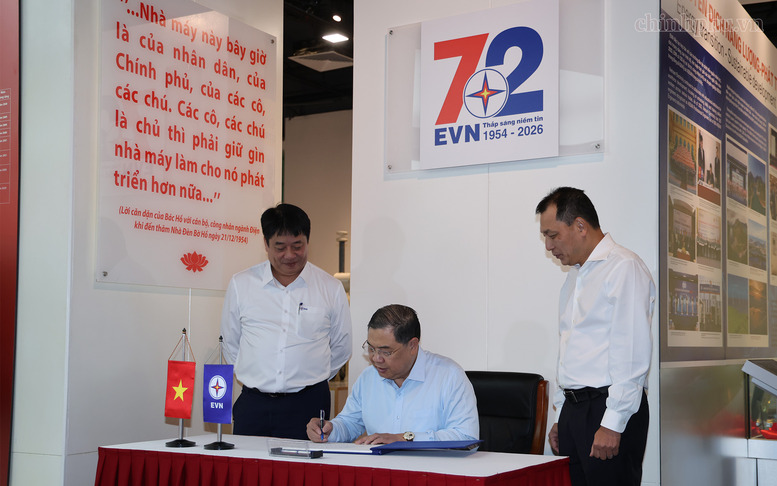
Standing Deputy Prime Minister Pham Gia Tuc signing guestbook in EVN's tradition room. - Photo: chinhphu.vn/Phuong Nguyen
Standing Deputy Prime Minister directed EVN to accelerate restructuring and reorganize its operations around clear pillars, linking restructuring efforts with its development strategy to enhance competitiveness and operational efficiency. In power generation development and electricity production, EVN needs to clearly define the scale and share of generation capacity it should retain to ensure its pivotal role in system operation, while also improving the management and operational efficiency of its existing power plants.
In terms of electricity business and services, EVN needs to continue improving the quality of electricity retail and technical services, placing customer satisfaction at the center. The power sector must take the lead in science and technology, innovation, and digital transformation, while accelerating automation and digitalization in management, operations, and service delivery.
EVN must also focus on developing the power industry, enhancing research capabilities, mastering technologies, and gradually building capacity to manufacture electrical equipment, energy storage systems, and modern transmission technologies. It should establish integrated production, maintenance, and repair capabilities to meet domestic demand and gradually target international markets.
Regarding power generation and grid development, the Standing Deputy Prime Minister called on EVN to mobilize resources to accelerate the implementation of key projects and proactively propose urgent projects, particularly in the northern region. Power generation development must go hand in hand with grid development, with transmission grid development taking the lead, to avoid situations where power plants are completed but there is insufficient transmission capacity to evacuate the generated power.
The Standing Deputy Prime Minister emphasized the need to diversify investment models, focusing on the development of interregional transmission lines, power evacuation facilities to evacuate electricity from areas with high generation capacity to areas with high electricity demand, and infrastructure for electricity imports. At the same time, EVN should continue to accelerate the development of rooftop solar power, self-generation and self-consumption power sources, wind power, energy storage systems, and other suitable energy sources.
The investment and construction of power generation and grid projects must ensure timely implementation, quality, and efficient use of capital, while complying with applicable standards, technical regulations, cost norms, and legal provisions. At the same time, safety must be ensured during construction and operation, along with compliance with environmental requirements, with no loss or waste of resources.
The Standing Deputy Prime Minister called for the remaining issues affecting stalled projects to be resolved once and for all, particularly those involving renewable energy projects, on the basis of applicable laws and policies and resolutions issued by competent authorities. Relevant agencies must closely coordinate with EVN to promptly address difficulties and obstacles, enabling the projects to be put into operation and deliver their intended benefits as soon as possible.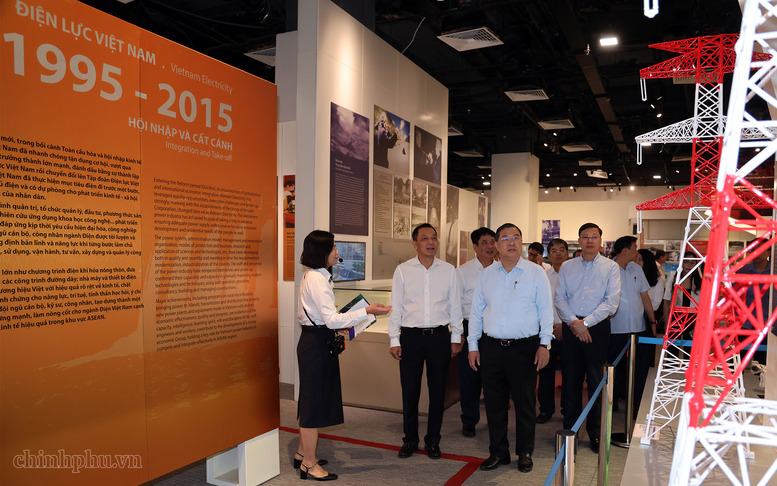
Standing Deputy Prime Minister Pham Gia Tuc visiting EVN’s tradition room - Photo: chinhphu.vn/Phuong Nguyen
Regarding electricity price management, the Deputy Prime Minister directed EVN to strictly comply with legal regulations, ensuring openness, transparency, and a balance of interests among the State, enterprises, and the public.
The Deputy Prime Minister emphasized that the institutional framework must genuinely facilitate development and support the country’s goal of achieving high economic growth. Alongside institutional improvement, effective implementation is now of particular importance. Ministries, sectors, and EVN should proactively coordinate, promptly identify and address difficulties and obstacles, and ensure that work is carried out swiftly, in compliance with regulations, and effectively.
Regarding EVN’s proposals on financial mechanisms, the Deputy Prime Minister assigned the Ministry of Finance to take the lead - in coordination with the State Bank and relevant agencies - to study and address the issues within their authority; matters exceeding their jurisdiction must be consolidated and reported to competent authorities for consideration and decision-making, ensuring legal compliance and avoiding the emergence of "ask-and-give" mechanisms.
The Standing Deputy Prime Minister also called for continued promotion of self-produced, self-consumed power sources and rooftop solar power; the advancement of direct power purchase mechanisms; and intensified efforts in electricity conservation and demand response, particularly during peak periods. There is a need to gradually promote a culture of electricity conservation and encourage efficient and responsible electricity use, thereby reducing costs and easing the pressure on investment in the power system.
The Deputy Prime Minister affirmed that ensuring power supply is not merely an economic task but a strategic issue of decisive importance to macroeconomic stability, national defense and security, and the well-being of the people. As the country sets ambitious economic growth targets for the coming years, electricity demand will continue to rise, placing significant pressure on EVN and the entire power sector.
Therefore, the Deputy Prime Minister called on EVN and relevant ministries and agencies to embrace a stronger spirit of decisive action, closer coordination, and greater responsibility, and to carry out their work with greater speed, higher quality, and more tangible results. He expressed confidence that, driven by its tradition of solidarity, resilience, and aspiration for progress, EVN would successfully fulfill its assigned duties, uphold its core role in ensuring national energy security, and make practical contributions to the country's rapid and sustainable development.
Translator: Đình Nam - Gia Đại
Share